
NAD+ Dissolvable Strips
About NAD+ Dissolvable Strips
NAD+ (beta-nicotinamide adenine dinucleotide, oxidized form) is a dinucleotide coenzyme central to cellular energy metabolism and redox chemistry. Formed from a nicotinamide mononucleotide joined to an adenine nucleotide by a pyrophosphate bridge, it has the molecular formula C21H27N7O14P2 and a molecular weight of 663.43 g/mol (CAS 53-84-9). It is a small molecule rather than a peptide and carries no amino-acid sequence.
NAD+ cycles between its oxidized (NAD+) and reduced (NADH) states, serving as the primary electron carrier in glycolysis, the citric acid cycle, and oxidative phosphorylation. Beyond redox chemistry, NAD+ is a consumed substrate for sirtuins, poly(ADP-ribose) polymerases (PARPs), and CD38, linking it to research on aging, DNA repair, and metabolic signaling. This 500mg vial is supplied for laboratory research use only.
Format: supplied as dissolvable oral strips (30 per box) — a fast, non-invasive research format. Exact per-strip potency is printed on the packaging.
Research use only — not for human or animal consumption. Per-batch documentation is provided with the material.
NAD+ is a coenzyme central to cellular energy metabolism, DNA-repair, and longevity research.
Supplied as dissolvable oral strips — 30 strips per box — for fast, consistent, non-invasive handling in the research setting. Exact per-strip potency is printed on the packaging.
Every batch is independently tested by an ISO 17025-accredited laboratory to ≥99% purity, with a certificate of analysis on file for its exact lot.
For research use only. Not for human or veterinary consumption, diagnosis, or treatment.
Specifications
- MaterialNAD+ Dissolvable Strips
- Also searched asNAD, NADplus, Nicotinamide Adenine Dinucleotide
- Research AreaLongevity Research
- PresentationDissolvable Strips
- CAS Number53-84-9
- Molecular FormulaC21H27N7O14P2
- Molecular Weight663.43 g/mol
- TypeDinucleotide coenzyme (small molecule, non-peptide)
- Receptor / TargetNon-receptor; redox cofactor and substrate for sirtuins, PARPs, and NAD-dependent dehydrogenases
- PubChem CID925 →
- Purity (HPLC)≥99%
- Identity (MS)Confirmed to specification
- TestingAccredited (ISO 17025) third-party laboratory
- DocumentationPer-batch COA →
Research on NAD+ spans its indispensable role as an electron carrier in energy metabolism and its function as a consumed cosubstrate for the sirtuin, PARP, and CD38 enzyme families. Declining tissue NAD+ levels with age and their restoration in preclinical models have made NAD+ metabolism a prominent theme in longevity and metabolic research.
Reported effects are drawn from biochemical, cell-culture, and animal studies; NAD+ biology is complex and context-dependent, and results are not established for human therapeutic use. This material is offered strictly as a research reagent.
NAD+ was first described by Arthur Harden and William Young in 1906 as a heat-stable "cozymase" factor required for fermentation, and its structure and redox role were elucidated over subsequent decades by Otto Warburg, Hans von Euler-Chelpin, and others. Renewed interest since the 2000s has centered on NAD+-consuming enzymes such as sirtuins and PARPs and their links to aging and metabolism.
- Belenky P, Bogan KL, Brenner C. NAD+ metabolism in health and disease. Trends Biochem Sci. 2007;32(1):12-19.
- Verdin E. NAD+ in aging, metabolism, and neurodegeneration. Science. 2015;350(6265):1208-1213.
- Rajman L, Chwalek K, Sinclair DA. Therapeutic potential of NAD-boosting molecules: the in vivo evidence. Cell Metab. 2018;27(3):529-547.
- PubChem Compound Summary for CID 925, NAD. National Center for Biotechnology Information.
View compound profile on NIH PubChem →
Cited literature refers to laboratory and preclinical research. This material is supplied strictly for research use only and is not intended to diagnose, treat, cure, or prevent any disease.
Are these research materials third-party tested?
Yes — every batch is analysed by an accredited (ISO 17025) independent laboratory using HPLC and mass spectrometry, with a per-batch Certificate of Analysis.
What purity are the materials?
Materials are verified to 99%+ HPLC purity. Any batch that does not meet the threshold is not released.
Do you provide a Certificate of Analysis (COA)?
Yes. Per-batch COA documentation is provided and is traceable by lot number.
Where do you ship from?
Materials are shipped from the USA in discreet, protective packaging.
Are these products for human use?
No. All materials are sold strictly for laboratory research use only — not for human or animal consumption, diagnosis, treatment, or prevention of any disease.
More Longevity Research materials
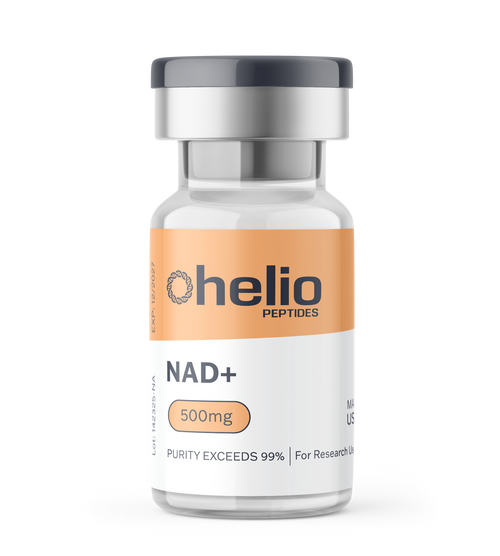
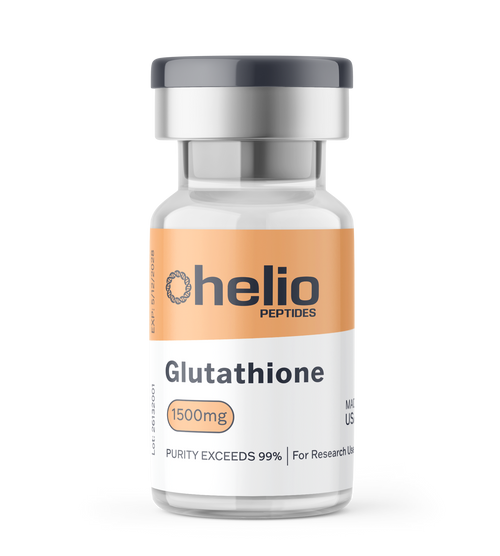 ✓ ≥99% View COA ›
Glutathione 1500MG Research Vial – Reduced L-Glutathione (GSH) | Third-Party Tested
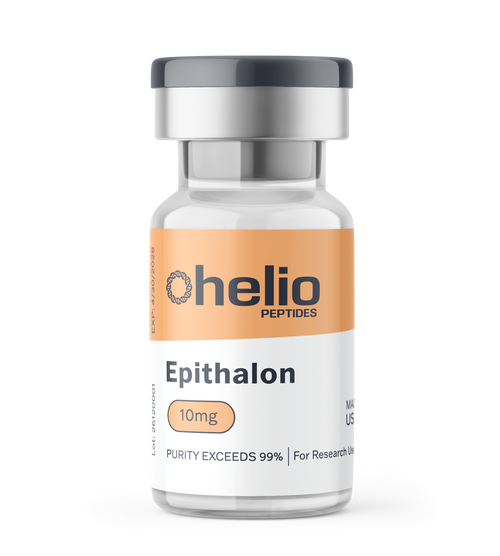
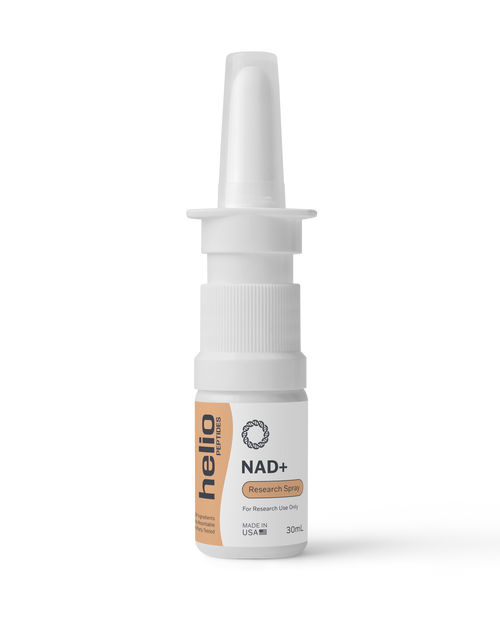
RESEARCH USE ONLY · NOT FOR HUMAN OR VETERINARY USE · 21+

