Sermorelin 5MG Research Vial - GHRH Analogue | Third-Party Tested
Sermorelin 5MG Research Vial - GHRH Analogue | Third-Party Tested
Couldn't load pickup availability
A single-component research material supplied for controlled research environments. Suitable for studies involving mitochondrial-derived peptide characterization and method development in model systems.
Free Shipping
On $100+
250K+ Peptides
Delivered
USA Made
& Sourced
Research Use Only
All products are intended solely for laboratory research and are not for human or animal consumption. By purchasing, the buyer agrees to use these products in compliance with all applicable laws.

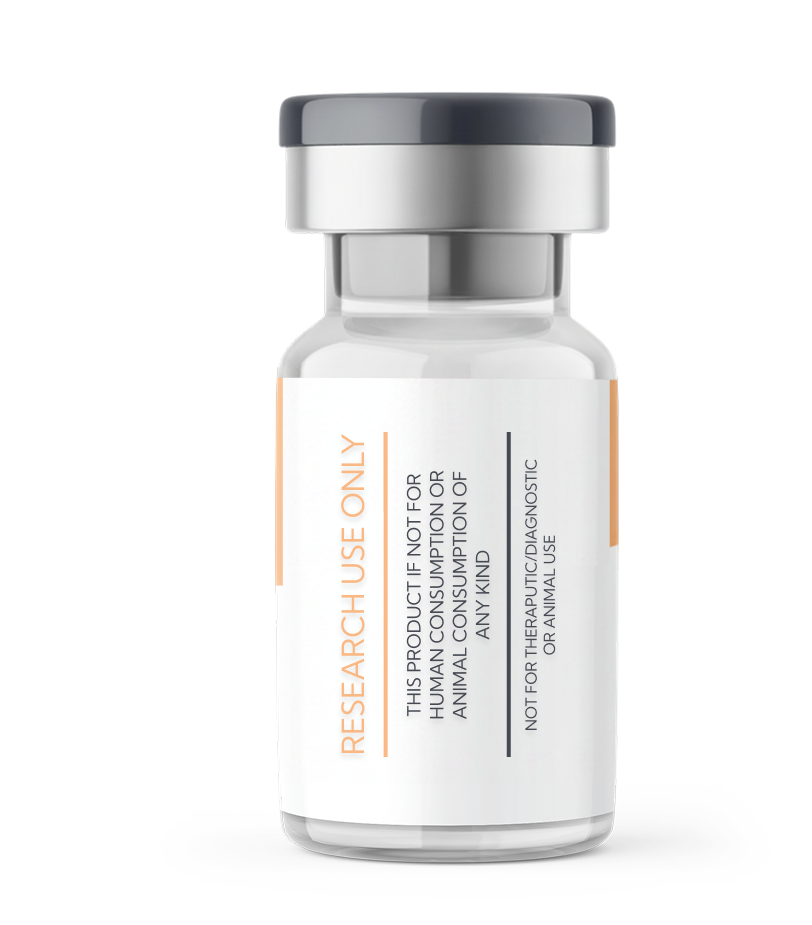
Sermorelin Research That Actually Gets Used
The growth hormone axis is one of the most studied endocrine systems in biomedical research. The compounds used to investigate it need to be precisely what they claim - correct sequence, confirmed purity, documented batch. Most suppliers can't demonstrate any of that. They list a compound and move on.
Helio Peptides operates differently.
Every vial of Sermorelin goes through independent third-party testing at an ISO 17025-accredited laboratory before it ships - identity confirmed by HPLC, molecular weight verified by mass spectrometry, and assay content confirmed at the labelled 5MG. The Certificate of Analysis is available on request for every batch.
Sermorelin is a 29-amino acid synthetic analogue of endogenous Growth Hormone-Releasing Hormone (GHRH) - the hypothalamic peptide that drives pulsatile GH secretion from the anterior pituitary. It is one of the most established research tools in the GHRH peptide class and one of the most studied GH secretagogue peptides in the published scientific literature. At $43.00 per vial - or $38.70 in a pack of ten - it is also one of the most cost-accessible GHRH research compounds available from a US-based, ISO-tested supplier. Researchers building out a GH-axis research programme may also be working with our CJC-1295 (with DAC) Vial or Tesamorelin Vial - both GHRH-class peptides with distinct half-life profiles and research applications.
What Makes This Vial Different
Sermorelin is widely available in the research peptide market. The difference between suppliers is whether they can prove what's in the vial. Here's what separates the Helio Peptides Sermorelin 5MG vial:
Third-party tested at an ISO 17025-accredited lab. The laboratory conducting the testing has been independently verified for technical accuracy and measurement reliability - not self-certified. Every Helio Peptides Sermorelin batch is tested at such a facility. Full batch documentation is available in our Certificate of Analysis.
USA manufactured. Synthesised by solid-phase peptide synthesis (SPPS) in a controlled US-based facility. Not imported raw powder relabelled domestically - produced, tested, and shipped from the United States.
Sequence-confirmed by mass spectrometry. The 29-amino acid sequence - Tyr-Ala-Asp-Ala-Ile-Phe-Thr-Asn-Ser-Tyr-Arg-Lys-Val-Leu-Gly-Gln-Leu-Ser-Ala-Arg-Lys-Leu-Leu-Gln-Asp-Ile-Met-Ser-Arg-NH₂ - is verified at every batch by MS. Truncated sequences and amino acid substitutions are a known failure mode in lower-quality SPPS manufacturing. Confirmed sequence is the baseline.
Lyophilised for stability. Supplied as lyophilised powder - substantially more stable than liquid formats in shipping and storage. Cold-chain packaging included on every order.
Cost-accessible with a bulk option. $43.00 single vial. $38.70 per vial in a pack of ten. One of the most competitive price points for ISO-accredited tested Sermorelin from a US supplier.
What Is Sermorelin?
Sermorelin (also known as GHRH 1-29 NH₂) is a synthetic 29-amino acid peptide corresponding to the biologically active N-terminal fragment of endogenous human Growth Hormone-Releasing Hormone (GHRH). Endogenous GHRH is a 44-amino acid hypothalamic peptide - Sermorelin retains the first 29 amino acids, which constitute the receptor-binding domain responsible for activating the GHRH receptor (GHRH-R) on somatotroph cells of the anterior pituitary gland.
Its mechanism of action is well-characterised: Sermorelin binds to the GHRH receptor with high affinity, triggering adenylyl cyclase activation and cAMP-mediated signalling cascades that stimulate the synthesis and pulsatile secretion of Growth Hormone (GH) from pituitary somatotrophs. Unlike exogenous GH, which bypasses the hypothalamic-pituitary axis entirely, Sermorelin preserves the physiological feedback regulation of GH secretion - GH released by Sermorelin stimulation is subject to the same somatostatin-mediated negative feedback that governs endogenous GH pulsatility. This property makes Sermorelin a valuable tool for studying hypothalamic-pituitary axis physiology in controlled research settings.
Sermorelin was originally developed in the 1970s–1980s as part of the systematic characterisation of GHRH receptor pharmacology. It has one of the longest published research records of any synthetic GHRH analogue - a body of literature spanning basic GH axis physiology, GH deficiency models, ageing-related GH decline, and body composition research in murine and primate models. Researchers working with the broader GHRH peptide class will find Sermorelin an essential reference compound alongside our CJC-1295 (with DAC) Vial - which offers extended half-life through albumin binding - and our Tesamorelin Vial - a stabilised GHRH analogue with an established preclinical and clinical research record in lipodystrophy and visceral adiposity models.
Sermorelin is distinct from GH secretagogue receptor (GHSR) agonists - a separate class that includes our Ipamorelin Vial and GHRP-2 Vial. GHRH analogues like Sermorelin act at the GHRH receptor on somatotrophs; GHSR agonists act at the ghrelin receptor through a distinct signalling pathway. The two classes are frequently studied in combination because of their synergistic effects on GH pulse amplitude and frequency - a well-established pharmacological interaction in the pituitary research literature.
|
"Sermorelin remains the gold-standard reference peptide for GHRH receptor research. Its 29-amino acid sequence, established receptor pharmacology, and extensive published research record make it indispensable for any laboratory investigating GH axis physiology, secretagogue synergy, or pituitary somatotroph function." - GH axis research community on Sermorelin as a reference standard |
Research Applications
Sermorelin has one of the broadest and most established research application profiles of any synthetic GHRH peptide. All applications described below are for controlled laboratory environments only. This product is for research use only and is not for human or animal consumption.
GHRH Receptor Pharmacology Research
The foundational research application for Sermorelin is characterisation of the GHRH receptor (GHRH-R) - a class B G-protein-coupled receptor expressed predominantly on pituitary somatotrophs. Sermorelin's well-defined binding affinity, documented EC50, and established dose-response profile in pituitary cell preparations make it the reference compound for GHRH-R pharmacology studies.
Research in this area includes receptor binding competition assays (comparing Sermorelin to novel GHRH analogues), GHRH-R signal transduction studies (cAMP accumulation, PKA activation, CREB phosphorylation), and investigations of receptor internalisation and desensitisation dynamics. Laboratories comparing GHRH-R agonists will frequently test Sermorelin in parallel with our CJC-1295 (with DAC) Vial and Tesamorelin Vial to characterise how half-life extension affects receptor pharmacodynamics and downstream pituitary GH output.
GH Axis Physiology and Pulsatility Research
Sermorelin is uniquely suited for studying physiological GH pulsatility in research models. Because it activates the native GHRH receptor and is subject to normal somatostatin-mediated feedback, Sermorelin-stimulated GH release recapitulates the pulsatile dynamics of endogenous GH secretion more closely than exogenous GH administration. This makes it the preferred tool for studies examining GH pulse frequency, amplitude, and interpulse trough concentrations in model systems.
Combination pulsatility studies - pairing Sermorelin with GHSR agonists to examine synergistic GH pulse amplification - are a well-established research paradigm. Our Ipamorelin Vial is the most commonly co-administered GHSR agonist in Sermorelin combination research, owing to its selectivity (minimal cortisol, prolactin, or ACTH stimulation relative to older GHSR agonists). Our GHRP-2 Vial and GHRP-6 Vial are also used in Sermorelin combination studies where less selective GHSR agonism is appropriate for the experimental design.
GH Deficiency and Pituitary Somatotroph Research
Sermorelin has a published research record in GH deficiency model systems - both primary (pituitary) and secondary (hypothalamic) GH deficiency phenotypes. Studies have examined Sermorelin's capacity to stimulate GH secretion in somatotroph-depleted or hypothalamically lesioned model systems, its effects on IGF-1 production downstream of GH stimulation, and its utility as a diagnostic stimulation tool in pituitary research protocols.
Researchers investigating downstream IGF-1 axis biology alongside Sermorelin GH stimulation may also be working with our IGF-1 LR3 Vial - a long-acting IGF-1 analogue that allows direct study of IGF-1 receptor signalling independent of the GH secretion step. Understanding both the upstream (GH axis) and downstream (IGF-1 axis) components of the somatotropic axis is central to research in growth, metabolism, and ageing biology.
Body Composition and Metabolic Research
Sermorelin has been examined in murine and larger animal model systems for its effects on body composition endpoints - including lean mass accretion, adiposity reduction, and metabolic rate modulation - mediated through GH-driven lipolysis and protein anabolism. This application intersects with metabolic syndrome research and age-related body composition change models. Researchers examining GH-axis-mediated metabolic effects alongside direct metabolic modulation may find our AOD-9604 Vial - a GH fragment studied specifically in lipolysis research - a complementary addition to Sermorelin-based GH secretagogue protocols. Our Tesamorelin Vial is also relevant for researchers specifically focused on visceral adiposity reduction models, given tesamorelin's established research record in lipodystrophy phenotypes.
Ageing and GH Decline Research
Age-related decline in GH pulsatility and amplitude - sometimes referred to as somatopause - is a well-documented physiological phenomenon in mammalian ageing research. Sermorelin has been studied in aged animal models as a tool for characterising the pituitary's residual responsiveness to GHRH stimulation as a function of age, and for examining GH axis contributions to ageing-related changes in muscle mass, bone density, and metabolic function. Researchers investigating multi-peptide ageing models may combine Sermorelin with our Epithalon 10MG Vial for telomere and bioregulator research, or our Thymosin Alpha 1 5MG Vial for immune ageing studies - covering complementary aspects of the ageing biology research landscape.
Sermorelin vs CJC-1295 vs Tesamorelin - Comparative Research
A significant area of GHRH research involves comparative characterisation of analogues with different half-life profiles and receptor engagement kinetics. Sermorelin's short plasma half-life (approximately 10–20 minutes in murine models) produces pulsatile, physiologically recapitulating GH secretion. Our CJC-1295 (with DAC) Vial extends GH stimulation through albumin binding (half-life of days), producing sustained GH elevation rather than pulsatile release - a distinct pharmacodynamic profile with different downstream consequences for IGF-1 and GH-dependent gene expression. Our Tesamorelin Vial offers a stabilised GHRH analogue with a half-life intermediate between Sermorelin and CJC-1295 with DAC. Running all three in comparative studies allows systematic characterisation of how GHRH analogue half-life shapes GH axis output, IGF-1 production, and tissue-level biological responses.
Product Specifications
|
Specification |
Detail |
|
Peptide Name |
Sermorelin (GHRH 1-29 NH₂) |
|
Also Known As |
GRF 1-29, Growth Hormone-Releasing Factor 1-29 |
|
CAS Number |
86168-78-7 |
|
Molecular Formula |
C₁₄₉H₂₄₆N₄₄O₄₂S |
|
Molecular Weight |
3,357.96 g/mol |
|
Amino Acid Count |
29 amino acids (amidated C-terminus) |
|
Sequence |
Tyr-Ala-Asp-Ala-Ile-Phe-Thr-Asn-Ser-Tyr-Arg-Lys-Val-Leu-Gly-Gln-Leu-Ser-Ala-Arg-Lys-Leu-Leu-Gln-Asp-Ile-Met-Ser-Arg-NH₂ |
|
Receptor Target |
GHRH Receptor (GHRH-R) - class B GPCR on pituitary somatotrophs |
|
Vial Size |
5MG lyophilised powder |
|
Synthesis Method |
Solid-phase peptide synthesis (SPPS) |
|
Purity |
≥99% - HPLC and mass spectrometry confirmed |
|
Testing Facility |
ISO 17025-accredited third-party laboratory |
|
Manufacture |
USA - controlled facility |
|
Short-Term Storage |
Refrigerate at 4°C (39°F) - days to weeks |
|
Long-Term Storage |
Freeze at -80°C (-112°F) - months to years |
|
Reconstitution |
Bacteriostatic water or sterile water - research use only |
|
Solubility |
Freely soluble in water |
|
Price (Single) |
$43.00 |
|
Price (Pack of 10) |
$38.70 per vial - 10% saving |
|
Intended Use |
Laboratory research only. Not for human or animal consumption. |
Purity Testing & Certificate of Analysis
Every batch of Helio Peptides Sermorelin is independently tested before release. Not sampled - every batch. Testing is conducted by an ISO 17025-accredited third-party laboratory using three confirmatory methods:
-
HPLC (High-Performance Liquid Chromatography): Separates and quantifies the peptide against certified reference standards - confirms identity, detects synthesis by-products and impurities, and verifies purity at ≥99%
-
Mass Spectrometry (MS): Confirms the exact molecular mass at 3,357.96 g/mol - verifies the complete 29-amino acid sequence and rules out truncated forms, substitutions, and synthesis artefacts
-
Assay / Content Testing: Confirms the exact quantity of active Sermorelin per vial matches the labelled 5MG
The COA for any specific batch is available on request. Email info@heliopeptides.com with your order number and batch details, or use the live chat on site. For a full explanation of COA methodology and how to read HPLC and MS data, visit our Certificate of Analysis and Testing page. Reconstitution guidance, storage protocols, and common research questions are answered on our FAQ page.
How to Reconstitute Sermorelin
Sermorelin is supplied as a lyophilised powder and is freely soluble in water, making reconstitution straightforward. The following protocol reflects standard research practice for GHRH peptide reconstitution.
-
Allow the vial to reach room temperature before opening - prevents moisture condensation on the peptide powder
-
Draw the required volume of bacteriostatic water (BW) or sterile water for injection (SWFI) using a sterile needle and syringe
-
Inject the diluent slowly along the inner wall of the vial - not directly onto the powder - to prevent mechanical disruption of the peptide
-
Gently swirl in a circular motion until fully dissolved - Sermorelin's high water solubility means the solution clears quickly. Do not shake or vortex
-
Inspect the solution - it should be clear and colourless. Discard if cloudiness or particulates are visible
-
Store reconstituted solution at 4°C and use within 2–4 weeks, or aliquot and freeze at -80°C for longer-term storage
Bacteriostatic water is the preferred diluent - its 0.9% benzyl alcohol content inhibits microbial growth and extends the stable use window of the reconstituted solution. For studies requiring precise concentration-response design, consider preparing a concentrated stock in bacteriostatic water and diluting to working concentrations in sterile PBS or appropriate buffer. For complete reconstitution and handling guidance, visit our FAQ page.
Storage Guidelines
GHRH peptides including Sermorelin require careful storage to maintain biological activity. The 29-amino acid sequence includes a methionine residue (position 27) that is susceptible to oxidation - a particular consideration for long-term storage and reconstituted solution handling.
-
On delivery: refrigerate immediately - do not leave at room temperature for extended periods
-
Short-term (days to weeks): refrigerate at 4°C, away from direct light, in original or opaque packaging
-
Long-term (months to years): freeze at -80°C - optimal for preserving peptide integrity including methionine residue stability
-
Avoid repeated freeze-thaw cycles: aliquot into single-use volumes before freezing if the vial will be accessed across multiple experimental sessions
-
Reconstituted solution: stable at 4°C for 2–4 weeks. Freeze aliquots at -80°C for longer storage - use nitrogen-purged vials where oxidation sensitivity is a concern
-
Avoid exposure to oxidising agents: do not store near peroxide-based reagents - methionine oxidation is the primary degradation pathway in GHRH peptides
Helio Peptides ships all vials with cold-chain packaging. Contact info@heliopeptides.com or call 1-855-435-4633 immediately if you have any concerns about vial condition upon arrival.
The Dosing Breakdown
|
Format |
Detail |
|
Vial size |
5MG lyophilised Sermorelin |
|
Single vial price |
$43.00 |
|
Pack of 10 price |
$38.70 per vial - 10% saving - $387.00 total |
|
Total in pack of 10 |
50MG Sermorelin across 10 vials |
|
Best for |
GH axis research programmes, GHRH-R pharmacology studies, secretagogue combination research requiring consistent batch supply |
The 5MG vial size provides sufficient material for multiple experimental runs across a range of in vitro and in vivo dosing protocols. For research programmes requiring consistent batch-matched supply across extended experimental timelines, the pack of ten at $38.70 per vial is the most cost-efficient format. For institutional or wholesale pricing on larger quantities, contact our wholesale team directly.
How Sermorelin Fits the Helio Lineup
When to choose Sermorelin: Your research involves GHRH receptor pharmacology, physiological GH pulsatility studies, GH deficiency models, or requires a well-characterised short-acting GHRH reference compound. Sermorelin is the gold-standard GHRH 1-29 analogue for studies requiring physiologically recapitulating pulsatile GH release.
When to also consider CJC-1295 with DAC: Our CJC-1295 (with DAC) Vial extends GHRH receptor stimulation over days through albumin binding - producing sustained GH elevation rather than pulsatile release. Choose CJC-1295 with DAC for studies examining the consequences of continuous versus pulsatile GH axis stimulation, or for long-interval dosing designs in murine models.
When to also consider CJC-1295 without DAC: Our CJC-1295 (without DAC) Vial - also known as Modified GRF 1-29 - offers an extended half-life (approximately 30 minutes) compared to Sermorelin without the prolonged albumin-bound stimulation of the DAC form. A useful intermediate for comparative half-life studies.
When to also consider Tesamorelin: Our Tesamorelin Vial is a stabilised GHRH analogue with an established preclinical research record in lipodystrophy, visceral adiposity, and cardiac metabolism models. Choose Tesamorelin when your research requires a GHRH analogue with demonstrated metabolic phenotype data in published literature.
When to combine with Ipamorelin: Our Ipamorelin Vial is the most selective GHSR agonist available for combination studies with Sermorelin. The Sermorelin + Ipamorelin pairing is a well-established research design for studying GHRH/GHSR synergy on GH pulse amplitude - one of the most studied GH secretagogue combinations in the preclinical literature.
When to also consider GHRP-2 or GHRP-6: Our GHRP-2 Vial and GHRP-6 Vial offer GHSR agonism with different selectivity profiles compared to Ipamorelin - GHRP-2 with moderate cortisol stimulation, GHRP-6 with pronounced appetite (ghrelin-like) stimulation. Choose based on the specificity requirements of your experimental design.
When to also consider IGF-1 LR3: For research examining downstream IGF-1 axis biology in the context of Sermorelin-stimulated GH secretion, our IGF-1 LR3 Vial allows direct study of IGF-1 receptor signalling - decoupling the upstream GH secretion step from downstream receptor biology.
Shipping & Fulfilment
|
Detail |
Policy |
|
Same-Day Dispatch |
Orders placed before the daily cut-off ship same day from our US facility |
|
Free Shipping |
On all orders over $100 |
|
Domestic Delivery |
1–3 business days within the USA |
|
Cold-Chain Packaging |
All vials ship with cold-chain protection to maintain peptide integrity in transit |
|
Payment Methods |
Credit/debit card (3D Secure), bank transfer, ETH, BTC, USDC |
|
Customer Service |
1-855-435-4633 · info@heliopeptides.com · Live Chat on site |
Frequently Asked Questions
What is Sermorelin used for in research?
Sermorelin is studied in controlled laboratory settings for GHRH receptor pharmacology, physiological GH pulsatility research, GH deficiency models, pituitary somatotroph biology, body composition studies, ageing-related GH decline research, and GH secretagogue combination protocols. Research use only - not for human or animal consumption.
What is the difference between Sermorelin and CJC-1295?
Both are synthetic GHRH analogues targeting the GHRH receptor. Sermorelin is GHRH 1-29 with a short plasma half-life (~10–20 min in murine models) - producing pulsatile GH release that mirrors physiological secretion. Our CJC-1295 (with DAC) Vial uses Drug Affinity Complex (DAC) technology to bind albumin, extending half-life to days and producing sustained GH elevation rather than pulses. The choice depends on whether your study requires pulsatile or sustained GH stimulation.
What is the difference between Sermorelin and Ipamorelin?
Sermorelin is a GHRH analogue - it activates the GHRH receptor (GHRH-R) on pituitary somatotrophs. Our Ipamorelin Vial is a GHSR agonist - it activates the ghrelin receptor through an entirely different pathway. The two are synergistic: GHRH and GHSR agonism together produce significantly greater GH pulse amplitude than either alone. This synergy is the basis of the Sermorelin + Ipamorelin combination design in GH axis research.
What is the molecular weight of Sermorelin?
3,357.96 g/mol. Molecular formula C₁₄₉H₂₄₆N₄₄O₄₂S. CAS number 86168-78-7. 29-amino acid peptide with amidated C-terminus, corresponding to the N-terminal fragment of human GHRH.
How do I reconstitute Sermorelin?
Add bacteriostatic water or sterile water slowly along the inner vial wall. Gently swirl until dissolved - Sermorelin is freely soluble in water. Do not shake. All procedures must follow your institution's laboratory protocols. Full reconstitution guide on our FAQ page.
How should I store Sermorelin?
Short-term: 4°C. Long-term: -80°C. Keep away from direct light and oxidising agents - the Met-27 residue is susceptible to oxidation. Avoid repeated freeze-thaw cycles. Reconstituted solution: 4°C for 2–4 weeks, or -80°C in aliquots. Where methionine oxidation is a concern, use nitrogen-purged storage vials.
Is every batch of Sermorelin third-party tested?
Yes - every batch. ISO 17025-accredited laboratory testing confirms identity, purity (≥99%), and assay content at 5MG. Visit our Certificate of Analysis page or email info@heliopeptides.com to request your batch COA.
Where is Helio Peptides Sermorelin manufactured?
Synthesised in the United States by solid-phase peptide synthesis (SPPS) in a controlled US-based facility. USA made, USA tested, shipped same day with cold-chain packaging.
What is the difference between Sermorelin and Tesamorelin?
Sermorelin is GHRH 1-29 - the N-terminal fragment of endogenous GHRH. Our Tesamorelin Vial is a synthetic GHRH analogue with a trans-3-hexenoic acid modification at the N-terminus that stabilises the peptide against enzymatic cleavage, extending its half-life. Tesamorelin has a distinct preclinical research record in lipodystrophy and visceral adiposity models. Sermorelin has a broader and longer established research history in basic GHRH-R pharmacology and GH pulsatility biology.
Can Sermorelin be used in combination with GHRP compounds?
Yes - GHRH/GHSR combination studies are a well-established research design. Our Ipamorelin Vial, GHRP-2 Vial, and GHRP-6 Vial are all available for combination protocols. The specific GHSR agonist chosen depends on the selectivity requirements of your study - Ipamorelin for high selectivity, GHRP-2 for moderate cortisol co-stimulation, GHRP-6 where ghrelin-like appetite effects are relevant to the model.
Does Helio Peptides ship internationally?
Contact info@heliopeptides.com or call 1-855-435-4633 for current international shipping availability. Domestic US orders: same-day dispatch, 1–3 business day delivery.
What payment methods are accepted?
Credit/debit card (3D Secure), bank transfer, Ethereum (ETH), Bitcoin (BTC), and USDC at locked exchange rates.
Is Sermorelin legal to buy in the USA?
Sermorelin is sold as a research chemical for laboratory use only. It is not a scheduled controlled substance in the United States and is not FDA-approved for human use in its current research-grade form. All purchases must comply with applicable federal and state laws. Buyers confirm research intent at checkout.
What does the Certificate of Analysis include?
Batch number, testing date, ISO 17025 facility credentials, HPLC chromatogram confirming identity and purity at ≥99%, mass spectrometry data confirming molecular weight at 3,357.96 g/mol, and assay result confirming 5MG content. Request via our Certificate of Analysis page or email info@heliopeptides.com with your order number.
Is there a bulk discount on Sermorelin?
Yes. Pack of 10 at $38.70 per vial - 10% saving over the $43.00 single price, $387.00 total for 50MG. For larger institutional or wholesale quantities, contact our wholesale team.
Explore More From Helio Peptides
-
CJC-1295 (with DAC) Vial - extended half-life GHRH analogue, sustained GH stimulation research
-
CJC-1295 (without DAC) Vial - Modified GRF 1-29, intermediate half-life GHRH analogue research
-
Tesamorelin Vial - stabilised GHRH analogue, lipodystrophy and visceral adipose research
-
Ipamorelin Vial - selective GHSR agonist, Sermorelin combination research
-
GHRP-2 Vial - GHSR agonist, GH secretagogue combination research
-
GHRP-6 Vial - GHSR agonist with ghrelin-like appetite effects, GH axis research
-
IGF-1 LR3 Vial - long-acting IGF-1 analogue, downstream GH axis signalling research
-
AOD-9604 Vial - GH fragment peptide, lipolysis and fat metabolism research
-
Thymosin Alpha 1 5MG Vial - immune modulation and antiviral research
-
Epithalon 10MG Vial - longevity and bioregulator research
-
Wholesale & Bulk Orders - institutional pricing for research programmes requiring consistent supply
All products sold on heliopeptides.com are intended solely for laboratory research and are not for human or animal consumption. These statements have not been evaluated by the Food and Drug Administration. These products are not intended to diagnose, treat, cure, or prevent any disease. By purchasing, the buyer confirms they are a qualified researcher and agrees to comply with all applicable federal and state laws. Not for sale to persons under the age of 21.
Why COAs Matter
“Purity” is a term most accurately used for raw peptide materials such as isolated compounds or lyophilized powders, where a single ingredient is measured against possible impurities. In these cases, purity testing helps confirm how much of the material is the intended peptide and how much may be made up of unwanted substances.
For finished products like capsules, tablets, or liquid sprays, the formulation contains additional ingredients such as stabilizers, fillers, and other supporting compounds. Because of this, using the word “purity” can be misleading, since the product is no longer a single isolated substance.
Instead, the most reliable and meaningful testing method for finished products focuses on reporting:
• Identity of the target peptide
• Assay or content, confirming the exact labeled amount per capsule or spray
All products are tested by an ISO 17025-accredited analytical laboratory to maintain consistency, transparency, quality, and trusted results.
How It Works
Order Online
Precision. Purity. Delivered fast.
Precision Lyophilization
Made in a controlled, U.S based facility under strict manufacturing standards.
Verified Purity
Every batch is third-party tested with HPLC and MS to confirm chemical integrity.
Same-Day Fulfillment
Products are dispatched same-day from our U.S. facility.
Frequently Asked Questions
Are your product tested?
Yes, every single batch is third-party tested using HPLC and mass
spectrometry to ensure 99%+ purity. We provide a Certificate of Analysis
(COA) upon request.
Where do you ship from?
All orders are shipped from our U.S.-based facility with same-day fulfillment on orders placed before the cutoff time.
Do you ship internationally?
We ship both domestically and internationally. Our logistics network
supports researchers across the globe with reliable, discreet shipping.
Are these for human consumptions?
No. All products are strictly for laboratory research purposes only and are not intended for human or animal consumption.
How should I store these products?
Store all peptides in a cool, dry place away from direct light. Lyophilized peptides should be kept at -20°C for long-term storage.
What payment methods are accepted?
We accept all major credit cards, debit cards, and other secure payment methods available at checkout.