Glp – 2 – 10MG
Glp – 2 – 10MG
Couldn't load pickup availability
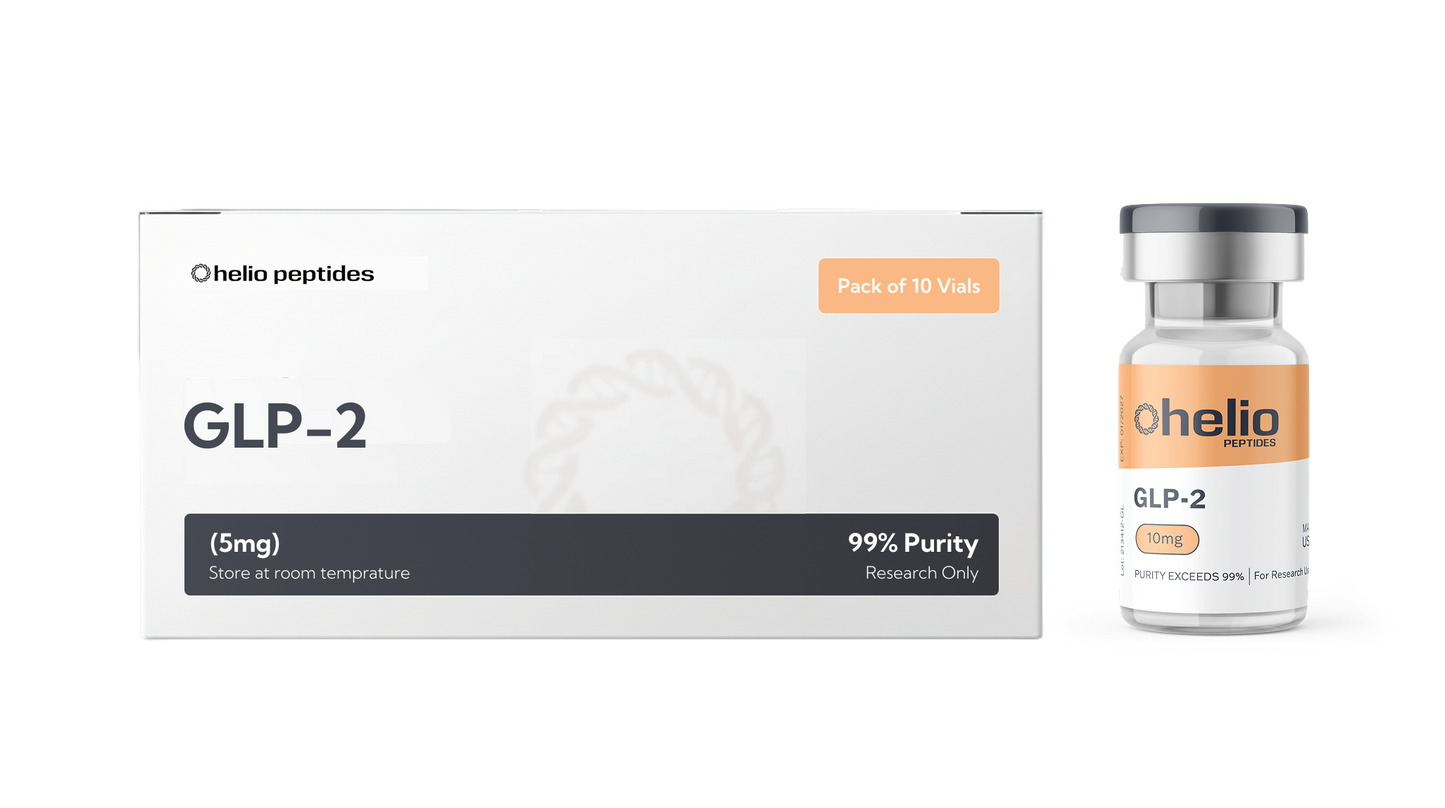
Helio Peptides – GLP-2 is a high-purity peptide offered in a 10mg lyophilized powder format, intended strictly for laboratory research and development purposes. Manufactured to exceed 99% purity and tested using both HPLC and LC-MS protocols, this peptide is supplied in a sterile, sealed vial to ensure stability and integrity.
Free Shipping
On $100+
250K+ Peptides
Delivered
USA Made
& Sourced
Research Use Only
All products are intended solely for laboratory research and are not for human or animal consumption. By purchasing, the buyer agrees to use these products in compliance with all applicable laws.


Handling and Storage Tips:
Keep peptides cold and away from light once received.
For short-term use (days to weeks), refrigeration at 4°C (39°F) is acceptable.
Lyophilized peptides are typically stable at room temperature for several weeks, making it suitable for moderate-term storage.
For long-term storage (months to years), it’s best to freeze peptides at -80°C (-112°F). Freezing optimally preserves peptide stability for extended periods.
FDA Disclosure & Intended Use:
FDA Disclosure: The statements on this website and the products sold herein have not been evaluated by the U.S. Food and Drug Administration (FDA). These products are not intended to diagnose, treat, cure, or prevent any disease. Products sold are for Research Use Only and are not for human or animal use.
Intended Purpose: Products sold on this site are intended solely for basic laboratory research, pharmaceutical research, or the development of new tests. They are not intended for diagnostic, therapeutic, or clinical use.
Why COAs Matter
“Purity” is a term most accurately used for raw peptide materials such as isolated compounds or lyophilized powders, where a single ingredient is measured against possible impurities. In these cases, purity testing helps confirm how much of the material is the intended peptide and how much may be made up of unwanted substances.
For finished products like capsules, tablets, or liquid sprays, the formulation contains additional ingredients such as stabilizers, fillers, and other supporting compounds. Because of this, using the word “purity” can be misleading, since the product is no longer a single isolated substance.
Instead, the most reliable and meaningful testing method for finished products focuses on reporting:
• Identity of the target peptide
• Assay or content, confirming the exact labeled amount per capsule or spray
All products are tested by an ISO 17025-accredited analytical laboratory to maintain consistency, transparency, quality, and trusted results.
How It Works
Order Online
Precision. Purity. Delivered fast.
Precision Lyophilization
Made in a controlled, U.S based facility under strict manufacturing standards.
Verified Purity
Every batch is third-party tested with HPLC and MS to confirm chemical integrity.
Same-Day Fulfillment
Products are dispatched same-day from our U.S. facility.
Frequently Asked Questions
Are your product tested?
Yes, every single batch is third-party tested using HPLC and mass
spectrometry to ensure 99%+ purity. We provide a Certificate of Analysis
(COA) upon request.
Where do you ship from?
All orders are shipped from our U.S.-based facility with same-day fulfillment on orders placed before the cutoff time.
Do you ship internationally?
We ship both domestically and internationally. Our logistics network
supports researchers across the globe with reliable, discreet shipping.
Are these for human consumptions?
No. All products are strictly for laboratory research purposes only and are not intended for human or animal consumption.
How should I store these products?
Store all peptides in a cool, dry place away from direct light. Lyophilized peptides should be kept at -20°C for long-term storage.
What payment methods are accepted?
We accept all major credit cards, debit cards, and other secure payment methods available at checkout.