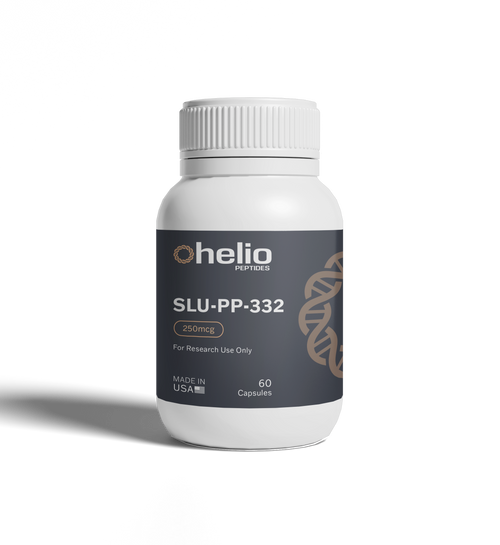
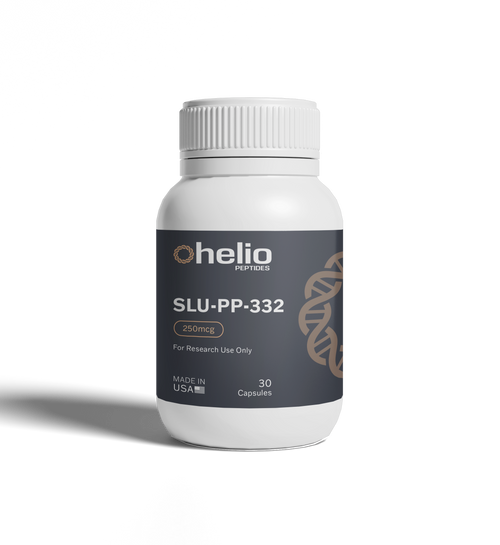
SLU-PP-332 5MG Research Vial - Pan-ERR Agonist | Third-Party Tested
Couldn't load pickup availability
A single-component research material supplied for controlled research environments. Suitable for studies involving mitochondrial-derived peptide characterization and method development in model systems.
Free Shipping
On $100+
250K+ Peptides
Delivered
USA Made
& Sourced
Research Use Only
All products are intended solely for laboratory research and are not for human or animal consumption. By purchasing, the buyer agrees to use these products in compliance with all applicable laws.

SLU-PP-332 Research That Actually Gets Used
Most research compound suppliers list a molecule, attach a generic description, and leave you to verify quality on your own. No named testing laboratory. No batch documentation. No independent confirmation that the compound in the vial matches what's on the label.
Helio Peptides operates differently.
Every vial of SLU-PP-332 goes through independent third-party testing at an ISO 17025-accredited laboratory before it ships - identity confirmed by HPLC, molecular weight verified by mass spectrometry, and assay content confirmed at the labelled 5MG. The Certificate of Analysis is available on request. Not a claim - a document.
SLU-PP-332 is one of the most actively researched small-molecule ERR agonists in the current preclinical literature - a pan-ERR agonist with EC50 values of 98 nM (ERRα), 230 nM (ERRβ), and 430 nM (ERRγ), developed at Saint Louis University School of Medicine and subsequently characterised across multiple peer-reviewed studies examining metabolic syndrome, mitochondrial biogenesis, cardiac metabolism, and exercise adaptation pathways. At $69.95 per vial - or $62.96 in a pack of ten - Helio Peptides provides one of the most rigorously documented sources of this compound available from a US-based supplier.
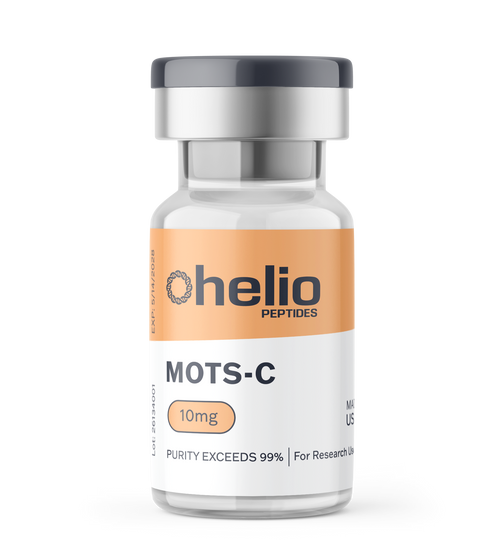
Researchers working alongside SLU-PP-332 in metabolic or mitochondrial programme contexts may also be studying our MOTS-c 10MG Vial - a mitochondrial-derived peptide studied in metabolic regulation and insulin sensitivity - or our Tesamorelin Vial for GH-axis and metabolic research. All held to the same ISO 17025 testing standard.
What Makes This Vial Different
SLU-PP-332 is widely available in the research compound market. Quality differentiation matters - here's what separates the Helio Peptides 5MG vial:
Third-party tested at an ISO 17025-accredited lab. ISO 17025 is the international standard for analytical laboratory competence - the facility conducting the testing has been independently verified for technical accuracy and measurement reliability, not just self-certified. Every Helio Peptides SLU-PP-332 batch is tested at such a facility. Full documentation is available in our Certificate of Analysis.
USA manufactured. Synthesised in a controlled US-based facility under strict manufacturing standards. Not imported raw material repackaged domestically - produced, tested, and dispatched from the United States.
Identity confirmed by mass spectrometry. CAS number 303760-60-3, molecular weight confirmed at every batch. MS data is available on the COA. Structural errors in small-molecule synthesis are a known quality failure mode - MS confirmation rules them out.
Lyophilised for stability. Supplied as lyophilised powder - substantially more stable than solution formats during shipping and storage. Reconstituted in bacteriostatic water for laboratory use. Cold-chain shipping included.
Transparent pricing with a bulk option. $69.95 single vial. $62.96 per vial in a pack of ten - a 10% saving for research programmes requiring consistent batch supply.
What Is SLU-PP-332?
SLU-PP-332 is a synthetic small-molecule compound developed at Saint Louis University School of Medicine as a potent pan-agonist of the Estrogen-Related Receptor (ERR) family - a class of orphan nuclear receptors that regulate mitochondrial biogenesis, oxidative phosphorylation, fatty acid oxidation, and cellular energy homeostasis. It is not a peptide in the classical amino acid sequence sense - it is a low-molecular-weight synthetic ligand that modulates nuclear receptor transcriptional activity.
The compound activates all three ERR isoforms - ERRα, ERRβ, and ERRγ - with greatest potency at ERRα (EC50 = 98 nM), followed by ERRβ (EC50 = 230 nM) and ERRγ (EC50 = 430 nM). This pan-ERR profile distinguishes SLU-PP-332 from earlier, more isoform-selective ERR modulators and has driven significant research interest in its capacity to model the transcriptional consequences of endurance exercise at the nuclear receptor level.
The mechanism of action is distinct from most metabolic research compounds. Rather than acting at cell surface receptors (as GLP-1 agonists do) or inhibiting metabolic enzymes, SLU-PP-332 operates at the transcriptional level - directly activating nuclear receptors that govern the expression of hundreds of genes involved in mitochondrial function, substrate oxidation, and exercise adaptation. Published preclinical studies have characterised this as a pharmacological exercise mimetic - a compound that reproduces the gene expression profile of aerobic exercise training in murine skeletal muscle, cardiac tissue, and metabolic organs.
Key downstream targets activated by SLU-PP-332 in published murine models include PGC-1α (master regulator of mitochondrial biogenesis), GLUT4 (glucose transporter), genes governing oxidative phosphorylation complex assembly, and fibre-type transition markers associated with slow-twitch (Type I) oxidative muscle phenotypes. This profile has attracted research interest across metabolic syndrome, cardiac metabolism, kidney disease, and exercise physiology - as documented in peer-reviewed publications including ACS Chemical Biology (2023), Circulation (2024), and the Journal of Pharmacology and Experimental Therapeutics (2024).
SLU-PP-332 is a distinct compound from our MOTS-c 10MG Vial - which is a mitochondrial-derived peptide (a 16-amino acid peptide encoded by the mitochondrial genome) studied in insulin sensitivity and metabolic regulation. Both target mitochondrial function through entirely different mechanisms: SLU-PP-332 via nuclear receptor transcriptional activation; MOTS-c via cytoplasmic AMPK pathway engagement. Researchers examining mitochondrial biology from multiple mechanistic angles frequently study both compounds in parallel.
|
"SLU-PP-332 is one of the most thoroughly characterised pan-ERR agonists in the preclinical research landscape. Its ability to activate an exercise-like gene program, enhance mitochondrial biogenesis, and modulate whole-body energy metabolism in murine models makes it a versatile investigational tool for multiple areas of metabolic research." - Preclinical metabolic research community on SLU-PP-332 characterisation |
Research Applications
SLU-PP-332 has been investigated across multiple documented research directions since its initial characterisation. All evidence to date is preclinical - conducted in murine models with no human trials completed as of mid-2026. All applications described below are for controlled laboratory environments only. This product is for research use only and is not for human or animal consumption.
Mitochondrial Biogenesis and ERR Pathway Research
The foundational research area for SLU-PP-332 is its characterisation as a pan-ERR agonist and its capacity to drive mitochondrial biogenesis gene expression. ERRα is widely recognised as a master regulator of mitochondrial energy metabolism - it controls the expression of nuclear-encoded mitochondrial genes across the oxidative phosphorylation pathway, the TCA cycle, and fatty acid beta-oxidation machinery.
Preclinical studies published in ACS Chemical Biology (2023) demonstrated that acute administration of SLU-PP-332 in murine models activated an aerobic exercise transcriptional programme - upregulating PGC-1α, increasing mitochondrial respiration in isolated skeletal muscle fibres, and improving endurance capacity in treadmill assays. This established SLU-PP-332 as a reference compound for studying transcriptionally driven mitochondrial biogenesis in tissue-specific contexts. Researchers investigating the molecular mechanisms by which exercise training produces mitochondrial adaptations will find SLU-PP-332 a well-documented tool for isolating the ERR transcriptional contribution from other exercise-related signals (mechanical, hormonal, neural).
Metabolic Syndrome and Obesity Research
Published murine studies have examined SLU-PP-332 in models of diet-induced metabolic syndrome, where its pan-ERR agonist activity has been studied for effects on fatty acid oxidation, glucose homeostasis, adiposity, and insulin sensitivity. A key publication in the Journal of Pharmacology and Experimental Therapeutics (2024) characterised SLU-PP-332 as counteracting multiple features of metabolic syndrome in high-fat-diet murine models - improving whole-body lipid handling and reducing adipose tissue accumulation. This has positioned SLU-PP-332 as a compound of interest for laboratories investigating pharmacological approaches to obesity-related metabolic dysregulation, distinct from GLP-1 receptor agonist approaches that operate through appetite suppression. Researchers studying GLP-1 pathway mechanisms alongside ERR transcriptional approaches may also be working with our Semaglutide research vial or Tirzepatide vial for mechanistic comparison of complementary metabolic research strategies.
Cardiac Metabolism and Heart Failure Models
A 2024 publication in Circulation characterised novel pan-ERR agonists including SLU-PP-332 in heart failure murine models, demonstrating improvements in cardiac fatty acid metabolism and mitochondrial function in failing myocardium. The cardiac application of SLU-PP-332 research is grounded in the well-established reliance of the healthy heart on fatty acid oxidation as its primary energy substrate - a metabolic preference that shifts unfavourably in heart failure toward glucose dependency with impaired overall ATP production. ERR activation's capacity to restore cardiac fatty acid oxidation gene expression has made SLU-PP-332 a research tool of interest in cardiac metabolism and heart failure biology. Researchers working in this area may also be investigating our Thymosin Alpha 1 5MG Vial in parallel immune modulation studies, or our BPC-157 Vial in cardiac tissue repair model systems.
Skeletal Muscle Fibre Type and Endurance Research
Published murine studies have investigated SLU-PP-332's capacity to drive fibre-type transitions in skeletal muscle - specifically promoting shifts toward oxidative (Type I / slow-twitch) fibre phenotypes at the gene expression level. This is one of the key adaptations produced by aerobic endurance training in humans, and the capacity to study it pharmacologically without the confounding variables of exercise protocols represents a significant methodological advantage.
Research has examined changes in myosin heavy chain isoform expression, mitochondrial density markers, and capillarisation-related gene expression following SLU-PP-332 administration in murine models. These findings have particular relevance for laboratories studying muscle biology, sarcopenia mechanisms, disuse atrophy, and ageing-related fibre-type shifts in skeletal muscle.
Kidney Disease and Ageing Research
A publication in the American Journal of Pathology (2023) examined ERR agonism - including SLU-PP-332 - in aged murine kidney models, demonstrating reversal of mitochondrial dysfunction and reduction in inflammatory markers in the ageing kidney. This finding has expanded research interest in SLU-PP-332 beyond exercise and metabolic biology into the domain of ageing-related organ dysfunction, where mitochondrial decline is increasingly recognised as a central pathological mechanism. Researchers investigating cellular senescence, mitochondrial quality control, and ageing biology alongside ERR pathway research may also be working with our Epithalon 10MG Vial - studied in telomere biology and longevity mechanisms - or our MOTS-c 10MG Vial in complementary mitochondrial ageing research contexts.
Product Specifications
|
Specification |
Detail |
|
Compound Name |
SLU-PP-332 |
|
Compound Type |
Synthetic small-molecule pan-ERR agonist (not a peptide in the amino acid sequence sense) |
|
CAS Number |
303760-60-3 |
|
Molecular Target |
Estrogen-Related Receptors ERRα, ERRβ, ERRγ (pan-agonist) |
|
EC50 (ERRα) |
98 nM |
|
EC50 (ERRβ) |
230 nM |
|
EC50 (ERRγ) |
430 nM |
|
Vial Size |
5MG lyophilised powder |
|
Purity |
≥99% - HPLC and mass spectrometry confirmed |
|
Testing Facility |
ISO 17025-accredited third-party laboratory |
|
Manufacture |
USA - controlled facility |
|
Short-Term Storage |
Refrigerate at 4°C (39°F) or freeze at -20°C - days to weeks |
|
Long-Term Storage |
Freeze at -20°C to -80°C (-4°F to -112°F) - months to years |
|
Reconstitution |
Bacteriostatic water or sterile water - research use only |
|
Solubility |
Soluble in DMSO; moderate aqueous solubility - use appropriate vehicle for your model system |
|
Price (Single) |
$69.95 |
|
Price (Pack of 10) |
$62.96 per vial - 10% saving |
|
Intended Use |
Laboratory research only. Not for human or animal consumption. |
Purity Testing & Certificate of Analysis
Every batch of Helio Peptides SLU-PP-332 is independently tested before release. Not sampled - every batch. Testing is conducted by an ISO 17025-accredited third-party laboratory using confirmatory analytical methods:
-
HPLC (High-Performance Liquid Chromatography): Quantifies the compound against certified reference standards - confirms identity, detects synthesis impurities, and verifies purity at ≥99%
-
Mass Spectrometry (MS): Confirms the exact molecular mass against CAS 303760-60-3 - rules out structural isomers, synthesis by-products, and batch-to-batch deviations
-
Assay / Content Testing: Confirms the exact quantity of active SLU-PP-332 per vial matches the labelled 5MG
The COA for any specific batch is available on request. Email info@heliopeptides.com with your order number and batch details, or use the live chat on site. For a full explanation of what a COA contains and how to interpret HPLC and MS data, visit our Certificate of Analysis and Testing page. Reconstitution guidance and common laboratory handling protocols are covered on our FAQ page.
How to Reconstitute SLU-PP-332
SLU-PP-332 is supplied as a lyophilised powder. Its solubility profile differs from classical water-soluble peptides - it is freely soluble in DMSO with moderate aqueous solubility. Vehicle selection depends on your experimental model system.
-
Allow the vial to reach room temperature before opening - prevents moisture condensation
-
For DMSO reconstitution (recommended for in vitro): Add the appropriate volume of sterile DMSO using a sterile needle and syringe. Vortex gently until fully dissolved. For cell-based assays, dilute the DMSO stock in aqueous buffer to the desired working concentration - final DMSO concentration should not exceed 0.1% in cell culture applications
-
For aqueous reconstitution (for in vivo or aqueous-compatible assays): Add bacteriostatic water or sterile water slowly along the inner wall of the vial. Gentle warming (37°C water bath, brief) may aid dissolution. Vortex gently. Use a vehicle such as 10% ethanol or 10% DMSO in PBS if full aqueous dissolution is not achieved at the target concentration
-
Inspect the solution - it should be clear. Discard if cloudiness or particulates persist after gentle warming
-
Store reconstituted DMSO stock at -20°C and use within 6 months. Aqueous solutions: use within 24–48 hours or freeze at -80°C in aliquots
For published murine in vivo protocols, SLU-PP-332 has been administered via intraperitoneal injection at 25–50 mg/kg in murine models, reconstituted in appropriate vehicle (commonly 5–10% DMSO in corn oil or PBS). Research protocols should be designed in accordance with your institution's guidelines and IACUC approvals. For additional handling guidance, visit our FAQ page.
Storage Guidelines
SLU-PP-332 stability in lyophilised form is maintained under proper cold storage conditions. Unlike some peptides that tolerate ambient temperature short-term, this small-molecule compound benefits from cold storage from the point of receipt.
-
On delivery: place immediately in cold storage - do not leave at room temperature for extended periods
-
Short-term (days to weeks): refrigerate at 4°C or freeze at -20°C, away from direct light and moisture
-
Long-term (months to years): freeze at -20°C to -80°C. Lower temperatures extend compound stability significantly over extended storage periods
-
Avoid repeated freeze-thaw cycles: aliquot before freezing if multiple experimental sessions are planned
-
Reconstituted DMSO stock: -20°C, stable for up to 6 months
-
Aqueous reconstituted solution: use within 24–48 hours or freeze in aliquots at -80°C
Helio Peptides ships all vials with cold-chain packaging. Contact info@heliopeptides.com or call 1-855-435-4633 if you have any concerns about compound condition on arrival.
The Dosing Breakdown
|
Format |
Detail |
|
Vial size |
5MG lyophilised SLU-PP-332 |
|
Single vial price |
$69.95 |
|
Pack of 10 price |
$62.96 per vial - 10% saving - $629.60 total |
|
Total in pack of 10 |
50MG SLU-PP-332 across 10 vials |
|
Published murine dose |
25–50 mg/kg intraperitoneal - preclinical models only |
|
Best for |
Metabolic, mitochondrial, cardiac, and exercise biology research programmes requiring consistent batch supply |
For ongoing research programmes requiring consistent supply and batch-matched vials, the pack of ten provides the best per-vial cost at $62.96. For institutional and bulk order enquiries, contact our wholesale team directly.
How SLU-PP-332 Fits the Helio Lineup
When to choose SLU-PP-332: Your research involves ERR pathway activation, mitochondrial biogenesis, exercise mimetic mechanisms, metabolic syndrome, cardiac fatty acid metabolism, or skeletal muscle fibre-type biology. SLU-PP-332 is the most characterised pan-ERR agonist available for preclinical research.
When to also consider MOTS-c: For research programmes examining mitochondrial function through complementary pathways, our MOTS-c 10MG Vial is a mitochondrial-derived peptide studied in AMPK-mediated metabolic regulation and insulin sensitivity - a different mechanistic route to overlapping biological outcomes. Frequently co-studied with SLU-PP-332 in comprehensive mitochondrial biology programmes.
When to also consider Tesamorelin: For GH-axis metabolic research running alongside ERR pathway studies, our Tesamorelin Vial covers growth hormone-releasing hormone analogue mechanisms in lipodystrophy and visceral adipose research - a complementary metabolic research direction.
When to also consider Semaglutide: Researchers comparing ERR transcriptional approaches to GLP-1 receptor agonism in metabolic syndrome models will find our Semaglutide research vial relevant - GLP-1 and ERR mechanisms operate through entirely different pathways and are increasingly studied in combination models.
When to also consider Epithalon: For ageing and longevity research programmes incorporating SLU-PP-332's kidney and mitochondrial ageing data, our Epithalon 10MG Vial covers telomere and bioregulator mechanisms studied in ageing model systems.
When to also consider BPC-157: For research programmes combining metabolic models with tissue repair endpoints, our BPC-157 Vial is among the most frequently referenced research peptides in connective tissue, GI, and systemic repair research - often run alongside metabolic compound studies.
Shipping & Fulfilment
|
Detail |
Policy |
|
Same-Day Dispatch |
Orders placed before the daily cut-off ship same day from our US facility |
|
Free Shipping |
On all orders over $100 |
|
Domestic Delivery |
1–3 business days within the USA |
|
Cold-Chain Packaging |
All vials ship with cold-chain protection to maintain compound integrity in transit |
|
Payment Methods |
Credit/debit card (3D Secure), bank transfer, ETH, BTC, USDC |
|
Customer Service |
1-855-435-4633 · info@heliopeptides.com · Live Chat on site |
Frequently Asked Questions
What is SLU-PP-332 used for in research?
SLU-PP-332 is a synthetic pan-ERR agonist studied in controlled laboratory settings for mitochondrial biogenesis research, exercise mimetic biology, metabolic syndrome models, cardiac fatty acid metabolism, skeletal muscle fibre-type research, and ageing-related mitochondrial dysfunction. All evidence is preclinical - murine models only, no human trials conducted. Research use only - not for human or animal consumption.
What does 'pan-ERR agonist' mean?
ERR stands for Estrogen-Related Receptor - a family of orphan nuclear receptors (ERRα, ERRβ, ERRγ) that regulate mitochondrial gene expression and energy metabolism. 'Pan-agonist' means SLU-PP-332 activates all three isoforms, with greatest potency at ERRα (EC50 = 98 nM). This is distinct from isoform-selective ERR modulators and allows SLU-PP-332 to model the full transcriptional consequence of ERR pathway activation.
What is the mechanism of action of SLU-PP-332?
SLU-PP-332 binds to and activates ERRα, ERRβ, and ERRγ nuclear receptors, triggering transcriptional upregulation of genes governing mitochondrial biogenesis (PGC-1α), fatty acid oxidation, oxidative phosphorylation, glucose transport (GLUT4), and slow-twitch muscle fibre markers. This mechanism operates at the transcriptional level - inside the cell nucleus - distinguishing it from surface receptor agonists like GLP-1 analogues or androgen receptor modulators.
What published research exists on SLU-PP-332?
Key published studies include: ACS Chemical Biology (2023) - ERRα/β/γ agonism induces acute aerobic exercise response and enhances exercise capacity in mice; Journal of Pharmacology and Experimental Therapeutics (2024) - pan-ERR agonist alleviates metabolic syndrome in murine models; Circulation (2024) - pan-ERR agonists improve cardiac fatty acid metabolism and mitochondrial function in heart failure; American Journal of Pathology (2023) - ERR agonism reverses mitochondrial dysfunction and inflammation in the ageing kidney. CAS: 303760-60-3.
Has SLU-PP-332 been tested in humans?
No. As of mid-2026, all published SLU-PP-332 data is preclinical - conducted exclusively in murine models using intraperitoneal administration. No human clinical trials have been conducted or registered. This product is for controlled laboratory research use only and is not for human consumption.
How do I reconstitute SLU-PP-332?
SLU-PP-332 is freely soluble in DMSO. For in vitro work, reconstitute in sterile DMSO and dilute in aqueous buffer to working concentration (keep final DMSO ≤0.1% in cell culture). For in vivo models, a vehicle of 5–10% DMSO in PBS or corn oil has been used in published murine studies. Full reconstitution guidance is on our FAQ page.
How should I store SLU-PP-332?
Lyophilised vial: -20°C to -80°C, away from light and moisture. Reconstituted DMSO stock: -20°C, use within 6 months. Aqueous solution: use within 24–48 hours or freeze aliquots at -80°C. Avoid repeated freeze-thaw cycles.
Is every batch of SLU-PP-332 third-party tested?
Yes - every batch. Testing by an ISO 17025-accredited laboratory confirms identity, purity (≥99%), and assay content at 5MG. Visit our Certificate of Analysis page or email info@heliopeptides.com to request the COA for your specific batch.
Where is Helio Peptides SLU-PP-332 manufactured?
Synthesised in a controlled US-based facility. USA made, USA tested, shipped same day from the US with cold-chain packaging.
What is the difference between SLU-PP-332 and MOTS-c?
SLU-PP-332 is a synthetic small-molecule compound that activates ERR nuclear receptors at the transcriptional level to drive mitochondrial biogenesis gene expression. Our MOTS-c 10MG Vial is a 16-amino acid mitochondrial-derived peptide that engages AMPK signalling pathways in the cytoplasm to regulate insulin sensitivity and metabolic homeostasis. Both target mitochondrial function, through entirely different mechanisms and at different cellular locations.
What is the difference between SLU-PP-332 and semaglutide in metabolic research?
Semaglutide acts as a GLP-1 receptor agonist at the cell surface - modulating appetite, insulin secretion, and gastric emptying through G-protein coupled receptor signalling. SLU-PP-332 activates ERR nuclear receptors at the transcriptional level, directly modulating mitochondrial gene expression independent of appetite or hormonal pathways. The two represent complementary mechanistic approaches to metabolic syndrome research. Our Semaglutide research vial is available for comparative studies.
Does Helio Peptides ship internationally?
Contact info@heliopeptides.com or call 1-855-435-4633 for current international shipping availability. Domestic US orders: same-day dispatch, 1–3 business day delivery.
What payment methods are accepted?
Credit/debit card (3D Secure), bank transfer, Ethereum (ETH), Bitcoin (BTC), and USDC at locked exchange rates.
Is SLU-PP-332 legal to buy in the USA?
SLU-PP-332 is sold as a research chemical for laboratory use only. It is not a scheduled controlled substance in the United States and is not FDA-approved for human use. All purchases must comply with applicable federal and state laws. Buyers confirm research intent at checkout.
What does the Certificate of Analysis include?
Batch number, testing date, ISO 17025 facility credentials, HPLC chromatogram confirming identity and purity, mass spectrometry data confirming CAS 303760-60-3 molecular identity, and final assay result confirming 5MG content. Request via our Certificate of Analysis page or email info@heliopeptides.com with your order number.
Explore More From Helio Peptides
-
MOTS-c 10MG Vial - mitochondrial-derived peptide, AMPK pathway, metabolic and insulin sensitivity research
-
Tesamorelin Vial - GH-axis metabolic research, lipodystrophy and visceral adipose models
-
Semaglutide Research Vial - GLP-1 receptor agonist, metabolic syndrome comparison research
-
Epithalon 10MG Vial - longevity, telomere, and ageing biology research
-
Thymosin Alpha 1 5MG Vial - immune modulation, TLR pathway, and antiviral research
-
BPC-157 Vial - tissue repair and systemic research
-
GHK-Cu 50MG Vial - copper peptide, collagen synthesis and regeneration research
-
Wholesale & Bulk Orders - institutional pricing for research programmes requiring consistent supply
All products sold on heliopeptides.com are intended solely for laboratory research and are not for human or animal consumption. These statements have not been evaluated by the Food and Drug Administration. These products are not intended to diagnose, treat, cure, or prevent any disease. By purchasing, the buyer confirms they are a qualified researcher and agrees to comply with all applicable federal and state laws. Not for sale to persons under the age of 21.
Why COAs Matter
“Purity” is a term most accurately used for raw peptide materials such as isolated compounds or lyophilized powders, where a single ingredient is measured against possible impurities. In these cases, purity testing helps confirm how much of the material is the intended peptide and how much may be made up of unwanted substances.
For finished products like capsules, tablets, or liquid sprays, the formulation contains additional ingredients such as stabilizers, fillers, and other supporting compounds. Because of this, using the word “purity” can be misleading, since the product is no longer a single isolated substance.
Instead, the most reliable and meaningful testing method for finished products focuses on reporting:
• Identity of the target peptide
• Assay or content, confirming the exact labeled amount per capsule or spray
All products are tested by an ISO 17025-accredited analytical laboratory to maintain consistency, transparency, quality, and trusted results.
How It Works
Order Online
Precision. Purity. Delivered fast.
Precision Lyophilization
Made in a controlled, U.S based facility under strict manufacturing standards.
Verified Purity
Every batch is third-party tested with HPLC and MS to confirm chemical integrity.
Same-Day Fulfillment
Products are dispatched same-day from our U.S. facility.
Frequently Asked Questions
Are your product tested?
Yes, every single batch is third-party tested using HPLC and mass
spectrometry to ensure 99%+ purity. We provide a Certificate of Analysis
(COA) upon request.
Where do you ship from?
All orders are shipped from our U.S.-based facility with same-day fulfillment on orders placed before the cutoff time.
Do you ship internationally?
We ship both domestically and internationally. Our logistics network
supports researchers across the globe with reliable, discreet shipping.
Are these for human consumptions?
No. All products are strictly for laboratory research purposes only and are not intended for human or animal consumption.
How should I store these products?
Store all peptides in a cool, dry place away from direct light. Lyophilized peptides should be kept at -20°C for long-term storage.
What payment methods are accepted?
We accept all major credit cards, debit cards, and other secure payment methods available at checkout.