
GLP-1 (7–37) 5MG Research Vial — Native Incretin Peptide | GLP-1R Agonist | Third-Party Tested
About GLP-1 (7–37) 5MG Research Vial — Native Incretin Peptide | GLP-1R Agonist | Third-Party Tested
GLP-1 (7-37) is the fully processed, biologically active form of glucagon-like peptide-1, a 30-amino-acid incretin hormone derived from the proglucagon gene and secreted by intestinal L-cells. In experimental systems it is characterized as an endogenous agonist of the glucagon-like peptide-1 receptor (GLP-1R), a class B G-protein-coupled receptor. Native GLP-1 is rapidly cleaved by dipeptidyl peptidase-4 (DPP-4), a property that has made it a foundational reference compound in studies of peptide stability and in the design of longer-acting GLP-1R agonists. This material is supplied strictly for Research Use Only.
Research use only — not for human or animal consumption. Per-batch documentation is provided with the material.
GLP-1 Research That Actually Gets Used
GLP-1 (Glucagon-Like Peptide-1) is the endogenous incretin hormone at the centre of the most significant pharmacological advances in metabolic medicine of the past two decades. The entire class of long-acting GLP-1 receptor agonists was developed directly from systematic research into native GLP-1 pharmacology. Understanding where those drugs came from, how the receptor works, and what the native ligand does that its pharmaceutical analogues replicate and improve upon requires the native GLP-1 peptide itself.
Helio Peptides operates differently.
Every vial of GLP-1 (7–37) goes through independent third-party testing at an ISO 17025-accredited laboratory before it ships — identity confirmed by HPLC and LC-MS, molecular weight verified by mass spectrometry, and assay content confirmed at the labelled 5MG. The Certificate of Analysis is available on request for every batch.
What Is GLP-1 (Glucagon-Like Peptide-1)?
GLP-1 (Glucagon-Like Peptide-1) is an endogenous incretin hormone derived from post-translational processing of the proglucagon precursor protein in enteroendocrine L cells of the small intestine and colon. It is a 30-amino acid peptide (GLP-1(7–36) amide, the primary circulating form) or 31-amino acid peptide (GLP-1(7–37), the glycine-extended form) produced from proglucagon by PC1/3-mediated cleavage — the same enzyme that also generates GLP-2 from the same precursor protein in L cells.
GLP-1 is secreted into the portal circulation in response to nutrient intake — particularly fat, protein, and fermentable carbohydrates — and exerts its primary effects through the GLP-1 receptor (GLP-1R), a class B G-protein coupled receptor expressed on pancreatic beta cells, alpha cells, cardiac myocytes, vagal afferent neurons, hypothalamic neurons, renal tubular cells, and multiple peripheral tissues. GLP-1R signals primarily through Gs/cAMP/PKA pathways and secondarily through β-arrestin-mediated pathways and Gq/IP3/calcium signalling, with the relative contribution of each pathway varying by tissue type and agonist structural identity.
Native GLP-1 has a plasma half-life of approximately 1–2 minutes in vivo — it is among the most rapidly degraded circulating peptides in human physiology. DPP-IV cleaves the His⁷–Ala⁸ bond to produce inactive GLP-1(9–36) amide, and neutral endopeptidase 24.11 further degrades the molecule. This rapid inactivation is the fundamental pharmacokinetic limitation that drove the development of DPP-IV-resistant analogues — long-acting analogues — which extend half-life from minutes to hours or days through fatty acid conjugation, albumin binding, or sequence modifications.
The Helio Peptides vial contains GLP-1(7–37) — the glycine-extended form of native GLP-1 that is equipotent to GLP-1(7–36) amide at the GLP-1R but has not undergone C-terminal amidation. This is the standard research form used in cell-based GLP-1R assays and short-duration in vitro studies where DPP-IV-mediated degradation is controlled by protease inhibitor inclusion.
|
"Native GLP-1(7–37) is the essential reference compound for any GLP-1 receptor research programme. Every GLP-1R agonist drug ever developed has been characterised relative to native GLP-1 in receptor binding assays, cAMP accumulation studies, and insulin secretion models. Without the native ligand as your reference, your pharmacological characterisation is incomplete." — Incretin research community on the essential role of native GLP-1 in receptor pharmacology |
How Does GLP-1 Work? GLP-1 Receptor Signalling Explained
GLP-1 activates the GLP-1 receptor (GLP-1R), a class B GPCR, primarily through Gs-mediated adenylyl cyclase activation, producing cAMP accumulation and PKA activation in target cells. The downstream consequences of GLP-1R activation differ by tissue:
Pancreatic Beta Cells — Glucose-Dependent Insulin Secretion
GLP-1R activation in pancreatic beta cells produces glucose-dependent insulin secretion — the defining pharmacological property of the incretin effect. cAMP/PKA signalling closes KATP channels, depolarises the beta cell membrane, activates voltage-gated calcium channels, and triggers insulin granule exocytosis. Critically, this effect is glucose-dependent: GLP-1 only amplifies insulin secretion when glucose is already present above the fasting threshold. At fasting glucose concentrations, GLP-1R activation alone produces minimal insulin secretion — which is why GLP-1R agonist drugs do not cause hypoglycaemia in the fasted state. Research applications include characterisation of GLP-1R signal transduction in primary islets, MIN6 cells, and INS-1 beta cell lines; cAMP accumulation assays; and insulin secretion perifusion studies.
Pancreatic Alpha Cells — Glucagon Suppression
GLP-1R activation suppresses glucagon secretion from pancreatic alpha cells in a glucose-dependent manner — primarily through indirect mechanisms involving somatostatin release from delta cells and paracrine signalling, rather than direct GLP-1R activation on alpha cells (which express lower GLP-1R levels than beta cells). Glucagon suppression contributes to the postprandial glucose-lowering effect of GLP-1 by reducing hepatic glucose output. Research applications include the study of alpha-beta cell communication and glucagon counter-regulatory dynamics.
Central Nervous System — Appetite Suppression and Satiety
GLP-1R is expressed throughout the central nervous system, including the hypothalamus (arcuate nucleus, paraventricular nucleus), brainstem (nucleus tractus solitarius), and vagal afferent neurons. CNS GLP-1R activation is responsible for the appetite-suppressive and satiety-promoting effects that make GLP-1R agonists effective for weight management. Research applications include characterisation of GLP-1R signalling in hypothalamic neuronal cultures, ex vivo brain slice preparations, and in vivo feeding behaviour studies in murine models.
Cardiovascular System — Cardiac and Vascular Effects
GLP-1R is expressed on cardiomyocytes and vascular endothelial cells. GLP-1R activation has been associated with improved myocardial contractility, reduced ischaemia-reperfusion injury, and cardioprotective signalling through cAMP/PKA and PI3K/Akt pathways in preclinical models. These findings contributed to the cardiovascular outcomes trials for GLP-1R agonist drugs (LEADER, SUSTAIN-6, REWIND), which demonstrated cardiovascular risk reduction. Research applications include cardiomyocyte GLP-1R signalling studies and ischaemia-reperfusion model protection assays.
Renal System — Natriuresis and Nephroprotection
GLP-1R is expressed in the renal proximal tubule, where its activation promotes natriuresis and diuresis through inhibition of the sodium-hydrogen exchanger (NHE3). Published studies have also characterised nephroprotective effects of GLP-1R agonism in diabetic kidney disease models.
Research Applications
Native GLP-1(7–37) is investigated across fundamental and translational research directions in incretin pharmacology. All applications below are for controlled laboratory environments only. This product is for research use only and is not for human or animal consumption.
GLP-1 Receptor Pharmacology and Binding Studies
Native GLP-1(7–37) is the gold-standard reference ligand for GLP-1R pharmacology. All GLP-1R binding affinity studies (radioligand displacement, HTRF competition assays, surface plasmon resonance) use native GLP-1 as the primary reference to establish the benchmark Ki or EC50 against which all GLP-1R agonist candidates are characterised. Published GLP-1R cryo-EM structures have been solved with native GLP-1 bound — its receptor-binding pose defines the pharmacophore requirements for GLP-1R agonist design. Research applications include characterisation of novel GLP-1R agonist candidates in HEK293-GLP-1R cells, CHO-GLP-1R preparations, and membrane preparations from GLP-1R-expressing tissues.
Pancreatic Islet and Beta Cell Biology
Native GLP-1(7–37) is widely used in isolated islet perifusion studies and beta cell line (MIN6, INS-1, βTC6) assays to characterise incretin-stimulated insulin secretion. Research designs commonly compare native GLP-1 (full-length GLP-1R agonist) with GLP-1(9–36) amide (the DPP-IV cleavage product, proposed to have GLP-1R-independent effects) to dissect the GLP-1R-dependent from GLP-1R-independent components of incretin biology.
DPP-IV Enzyme Kinetics and Incretin Degradation Research
GLP-1(7–37)'s well-characterised rapid DPP-IV cleavage makes it one of the primary substrates for DPP-IV kinetic studies. Published kcat/Km values for DPP-IV-mediated GLP-1(7–37) cleavage are the benchmark against which DPP-IV inhibitor potency and selectivity are characterised in drug discovery research. Native GLP-1 is also used alongside GLP-1(9–36) amide to study what happens to incretin activity after DPP-IV cleavage — investigating whether the metabolite retains GLP-1R-independent biological activity (a topic with unresolved findings in the literature).
Cardiovascular Research — GLP-1R Cardioprotection
GLP-1R activation has been studied for cardioprotective effects in preclinical models including ischaemia-reperfusion injury, heart failure, and arrhythmia models. Native GLP-1(7–37) is used in acute cardiac research studies — including isolated perfused heart (Langendorff) preparations and cardiomyocyte cultures — where its short half-life is not a limitation because the experiment is controlled ex vivo.
Neuropeptide and Gut-Brain Axis Research
GLP-1R-expressing neurons in the hypothalamus and brainstem nucleus tractus solitarius (NTS) are central to GLP-1's appetite-suppressive and satiety-promoting effects. Native GLP-1 is used in acute hypothalamic neuronal culture experiments, slice electrophysiology, and ex vivo vagal afferent preparation studies to characterise the neuronal GLP-1R signalling profile independently of the sustained receptor stimulation produced by pharmaceutical analogues.
Product Specifications
|
Specification |
Detail |
|
Peptide Name |
GLP-1 (7–37) / Glucagon-Like Peptide-1 (7–37) |
|
Also Known As |
GLP-1(7–37), native GLP-1, GLP-1 glycine extended form |
|
CAS Number |
106612-94-6 |
|
Molecular Formula |
C₁₅₈H₂₅₁N₄₃O₄₆S |
|
Molecular Weight |
3,355.7 g/mol |
|
Amino Acid Count |
31 amino acids |
|
Sequence |
HAEGTFTSDVSSYLEGQAAKEFIAWLVKGR |
|
Isoform Note |
GLP-1(7–37) is the glycine-extended form; GLP-1(7–36) amide is the primary circulating form — both are equipotent at GLP-1R |
|
Receptor Target |
GLP-1 Receptor (GLP-1R) — class B GPCR, Gs/cAMP primary signalling |
|
DPP-IV Sensitivity |
Rapidly cleaved at His⁷–Ala⁸ bond — native half-life ~1–2 min in vivo |
|
Vial Size |
5MG lyophilised powder |
|
Purity |
≥99% — HPLC and LC-MS confirmed |
|
Testing Facility |
ISO 17025-accredited third-party laboratory |
|
Manufacture |
USA — controlled facility |
|
Short-Term Storage |
Refrigerate at 4°C (39°F) — days to weeks, with DPP-IV inhibitor in solution if applicable |
|
Long-Term Storage |
Freeze at -80°C (-112°F) — months to years |
|
Solubility |
Soluble in dilute acetic acid; moderate aqueous solubility at neutral pH |
|
Price (Single) |
$64.99 |
|
Price (Pack of 10) |
$58.49 per vial — 10% saving |
|
Intended Use |
Laboratory research only. Not for human or animal consumption. |
Purity Testing & Certificate of Analysis
Every batch of Helio Peptides GLP-1 is independently tested before release. Not sampled — every batch. Testing is conducted by an ISO 17025-accredited third-party laboratory:
-
HPLC (High-Performance Liquid Chromatography): Confirms identity and purity at ≥99% — detects synthesis by-products, truncated sequences, and DPP-IV cleavage product GLP-1(9–37) contamination
-
LC-MS (Liquid Chromatography-Mass Spectrometry): Confirms molecular mass at 3,355.7 g/mol — verifies the complete 31-amino acid GLP-1(7–37) sequence
-
Assay / Content Testing: Confirms the exact quantity per vial matches the labelled 5MG
COA available on request. Email info@heliopeptides.com. Full testing methodology at our Certificate of Analysis and Testing page. Handling guidance at our FAQ page.
Storage Guidelines
-
On delivery: refrigerate or freeze immediately
-
Short-term (days to weeks): refrigerate at 4°C, away from light, in original sealed vial
-
Long-term (months to years): freeze at -80°C — optimal for extended stability
-
Avoid repeated freeze-thaw cycles: aliquot before freezing
Helio Peptides ships all vials with cold-chain packaging. Contact info@heliopeptides.com or call 1-855-435-4633 immediately if you have concerns on arrival.
Pack Options
|
Format |
Detail |
|
Vial size |
5MG lyophilised GLP-1(7–37) |
|
Single vial price |
$64.99 |
|
Pack of 10 price |
$58.49 per vial — 10% saving — $584.90 total |
|
Total in pack of 10 |
50MG GLP-1 across 10 vials |
For research programmes requiring consistent batch-matched supply, the pack of ten is the most cost-efficient format. For institutional or wholesale pricing, contact our wholesale team directly.
Shipping & Fulfilment
|
Detail |
Policy |
|
Same-Day Dispatch |
Orders placed before the daily cut-off ship same day from our US facility |
|
Free Shipping |
On all orders over $100 |
|
Domestic Delivery |
1–3 business days within the USA |
|
Cold-Chain Packaging |
All vials ship with cold-chain protection to maintain peptide integrity in transit |
|
Payment Methods |
Credit/debit card (3D Secure), bank transfer, ETH, BTC, USDC |
|
Customer Service |
1-855-435-4633 · info@heliopeptides.com · Live Chat on site |
Frequently Asked Questions
What is the difference between GLP-1 and GLP-2?
GLP-1 and GLP-2 are both derived from proglucagon by PC1/3 processing in intestinal L cells, but they activate entirely different receptors. GLP-1 activates GLP-1R to regulate glucose homeostasis and appetite. GLP-2 activates GLP-2R to stimulate intestinal mucosal growth and barrier function. GLP-2 has no insulin secretagogue activity; GLP-1 has no intestinotrophic activity. Our GLP-2 5MG Vial is available for GLP-2R research.
What is the molecular weight of GLP-1?
GLP-1(7–37) has a molecular weight of 3,355.7 g/mol. Molecular formula C₁₅₈H₂₅₁N₄₃O₄₆S. CAS number 106612-94-6. 31-amino acid peptide, sequence HAEGTFTSDVSSYLEGQAAKEFIAWLVKGR. GLP-1(7–36) amide — the primary circulating form — differs only in C-terminal amidation instead of the glycine at position 37.
Is every batch of GLP-1 third-party tested?
Yes — every batch. ISO 17025-accredited laboratory testing using HPLC and LC-MS confirms identity, purity (≥99%), and assay content at 5MG. Visit our Certificate of Analysis page or email info@heliopeptides.com to request your batch COA.
Where is Helio Peptides GLP-1 manufactured?
Synthesised in the United States in a controlled US-based facility. USA made, USA tested, shipped same day with cold-chain packaging.
What is the GLP-1(7–36) amide versus GLP-1(7–37) distinction?
GLP-1(7–36) amide is the primary circulating form of native GLP-1 — it is C-terminally amidated and constitutes approximately 80% of circulating GLP-1. GLP-1(7–37) is the glycine-extended form (non-amidated) and constitutes approximately 20% of circulating GLP-1. Both are equipotent at the GLP-1R. The Helio Peptides vial contains GLP-1(7–37). Both forms are rapidly cleaved by DPP-IV at the same His⁷–Ala⁸ site to the same inactive metabolite.
Does Helio Peptides ship internationally?
Contact info@heliopeptides.com or call 1-855-435-4633 for current international shipping availability. Domestic US orders: same-day dispatch, 1–3 business day delivery.
What payment methods are accepted?
Credit/debit card (3D Secure), bank transfer, Ethereum (ETH), Bitcoin (BTC), and USDC at locked exchange rates.
Is there a bulk discount on GLP-1?
Yes. Pack of 10 at $58.49 per vial — 10% saving over $64.99 single price, $584.90 total for 50MG. For institutional or wholesale pricing, contact our wholesale team.
Explore More From Helio Peptides
-
GLP-3 (RT) 15MG Vial — GLP-1R/GIPR/GCGR triple agonist, obesity and MASLD research
-
GLP-2 5MG Vial — GLP-2R agonist, intestinal biology and SBS adaptation research
-
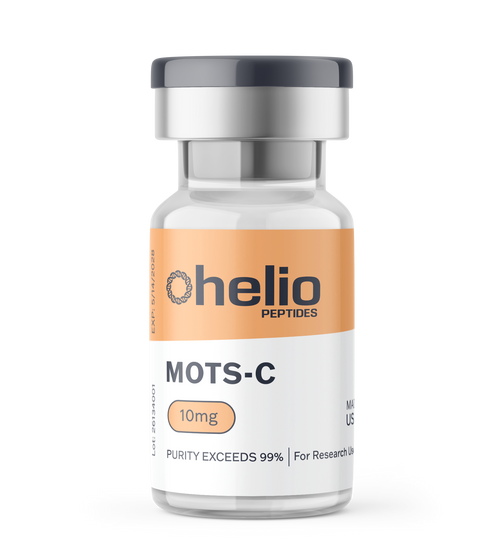
MOTS-c 10MG Vial — mitochondrial-derived peptide, AMPK metabolic regulation research
-
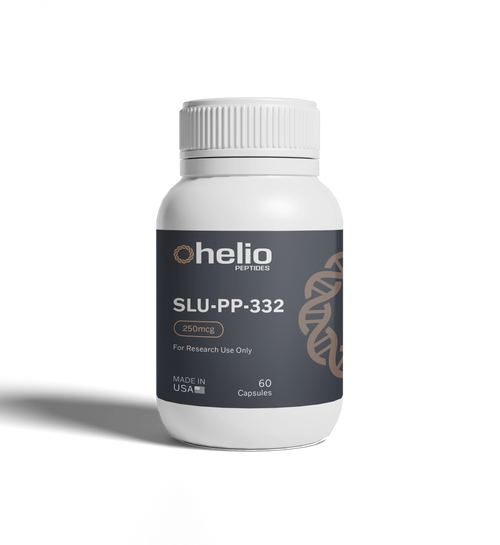
SLU-PP-332 5MG Vial — pan-ERR agonist, mitochondrial biogenesis and exercise biology
-
IGF-1 LR3 1MG Vial — downstream anabolic signalling, PI3K/Akt/mTOR pathway research
-
BPC-157 Vial — GI tract, mucosal repair and systemic tissue repair research
-
Certificate of Analysis & Testing — ISO 17025 testing methodology explained
-
Wholesale & Bulk Orders — institutional pricing for research programmes
All products sold on heliopeptides.com are intended solely for laboratory research and are not for human or animal consumption. These statements have not been evaluated by the Food and Drug exposure. These products are not intended to diagnose, treat, cure, or prevent any disease. The Helio Peptides GLP-1 vial is a synthetic research peptide and is not an FDA-approved pharmaceutical product. By purchasing, the buyer confirms they are a qualified researcher and agrees to comply with all applicable federal and state laws. Not for sale to persons under the age of 21.
Specifications
- MaterialGLP-1 (7–37) 5MG Research Vial — Native Incretin Peptide | GLP-1R Agonist | Third-Party Tested
- Also searched asGLP1, GLP 1
- Research AreaMetabolic Research
- Presentation—
- CAS Number106612-94-6
- Molecular FormulaC151H228N40O47
- Molecular Weight3355.71 g/mol
- TypeLinear peptide (incretin hormone)
- Receptor / TargetGlucagon-like peptide-1 receptor (GLP-1R)
- PubChem CID44290899 →
HAEGTFTSDVSSYLEGQAAKEFIAWLVKGR
- Purity (HPLC)≥99%
- Identity (MS)Confirmed to specification
- TestingAccredited (ISO 17025) third-party laboratory
- DocumentationPer-batch COA →
These observations are drawn from experimental and in-vitro settings and are provided for scientific context only. No human efficacy, handling, or therapeutic conclusions are implied.
Glucagon-like peptide-1 was identified in the 1980s following the cloning of the proglucagon gene, and the truncated GLP-1 (7-37) and GLP-1 (7-36) amide forms were subsequently established as the active incretin species by Orskov, Holst, and colleagues. This work laid the biochemical foundation for the incretin field and the later development of GLP-1 receptor agonists and DPP-4 inhibitors.
- Orskov C, Holst JJ, et al. (1989). Complete sequences of glucagon-like peptide-1 from human and pig small intestine. Journal of Biological Chemistry.
- Mojsov S, Weir GC, Habener JF (1987). Journal of Clinical Investigation.
- Holst JJ (2007). The physiology of glucagon-like peptide 1. Physiological Reviews.
View compound profile on NIH PubChem →
Cited literature refers to laboratory and preclinical research. This material is supplied strictly for research use only and is not intended to diagnose, treat, cure, or prevent any disease.
Are these research materials third-party tested?
Yes — every batch is analysed by an accredited (ISO 17025) independent laboratory using HPLC and mass spectrometry, with a per-batch Certificate of Analysis.
What purity are the materials?
Materials are verified to 99%+ HPLC purity. Any batch that does not meet the threshold is not released.
Do you provide a Certificate of Analysis (COA)?
Yes. Per-batch COA documentation is provided and is traceable by lot number.
Where do you ship from?
Materials are shipped from the USA in discreet, protective packaging.
Are these products for human use?
No. All materials are sold strictly for laboratory research use only — not for human or animal consumption, diagnosis, treatment, or prevention of any disease.
More Metabolic Research materials

 ✓ ≥99% View COA ›
MOTS-c 10MG Research Vial - Mitochondrial-Derived Peptide | Third-Party Tested
RESEARCH USE ONLY · NOT FOR HUMAN OR VETERINARY USE · 21+

