
IGF-1 LR3 1MG Research Vial - Long-Acting IGF-1 Analogue | Third-Party Tested
About IGF-1 LR3 1MG Research Vial - Long-Acting IGF-1 Analogue | Third-Party Tested
As a ligand for the IGF-1 receptor, IGF-1 LR3 is widely used as a research tool for probing IGF-1R-mediated signaling, including pathways governing cell proliferation, protein synthesis and survival. It sits downstream of the GH/GHRH axis and is frequently studied alongside GHRH analogs and secretagogues to model the full GH/IGF-1 signaling cascade. Supplied as a lyophilized powder for research use only.
Research use only — not for human or animal consumption. Per-batch documentation is provided with the material.
IGF-1 LR3 Research That Actually Gets Used
Helio Peptides operates differently.
Every vial of IGF-1 LR3 goes through independent third-party testing at an ISO 17025-accredited laboratory before it ships - identity confirmed by HPLC, molecular weight verified by mass spectrometry, and assay content confirmed at the labelled 1MG. The Certificate of Analysis is available on request for every batch.
IGF-1 LR3 (Long R3 IGF-1) is a synthetic 83-amino acid analogue of human IGF-1, engineered with two key modifications that dramatically extend its functional half-life and biological potency in research settings: an N-terminal 13-amino acid extension and a glutamic acid-to-arginine substitution at position 3. The result is a compound with approximately 2–3x greater potency than native IGF-1 and a plasma half-life extended from approximately 12–15 hours (for native IGF-1) to 20–30 hours in published in vitro and in vivo model systems. At $59.95 per vial - or $53.96 in a pack of ten - Helio Peptides provides one of the most rigorously documented and cost-accessible sources of research-grade IGF-1 LR3 available from a US-based, ISO-accredited tested supplier. Researchers building GH/IGF axis programmes may also be working with our Sermorelin 5MG Vial for upstream GHRH-mediated GH stimulation, or our AOD-9604 Vial for GH fragment lipolysis research alongside IGF-1 LR3's anabolic and proliferative signalling studies.
What Makes This Vial Different
IGF-1 LR3 is available from multiple research peptide suppliers. The difference is documentation. Here's what sets the Helio Peptides 1MG vial apart:
Third-party tested at an ISO 17025-accredited lab. The laboratory conducting the testing has been independently verified for technical accuracy - not self-certified. Every Helio Peptides IGF-1 LR3 batch is tested at such a facility. Full batch data is available in our Certificate of Analysis.
USA manufactured. Synthesised by solid-phase peptide synthesis (SPPS) in a controlled US-based facility. Not imported bulk material relabelled domestically - manufactured, tested, and dispatched from the United States.
83-amino acid sequence confirmed by mass spectrometry. The full 83-amino acid sequence - including the N-terminal extension and R3 substitution - is verified at every batch by MS. At 9,111.46 g/mol, IGF-1 LR3 is one of the larger synthetic peptides in the Helio range. Sequence fidelity at this scale requires rigorous MS confirmation.
Lyophilised for stability. Supplied as lyophilised powder - substantially more stable than solution formats during shipping and storage. Cold-chain packaging included on every order.
What Is IGF-1 LR3?
IGF-1 LR3 incorporates two structural modifications relative to native IGF-1 (CAS 67763-96-6): (1) an N-terminal 13-amino acid extension that reduces affinity for IGFBPs approximately 1,000-fold compared to native IGF-1, and (2) a glutamic acid-to-arginine substitution at position 3 (the 'R3' designation) that further decreases IGFBP binding while maintaining full IGF-1 receptor (IGF-1R) affinity. The combined effect is a compound that retains the full signalling potency of native IGF-1 at the IGF-1 receptor while being substantially resistant to IGFBP-mediated sequestration - resulting in greater bioavailability at target cells and an extended functional half-life of approximately 20–30 hours versus 12–15 hours for native IGF-1.
IGF-1 LR3 is a direct downstream signalling compound within the GH/IGF axis - the same axis studied upstream using our Sermorelin 5MG Vial (GHRH-mediated pituitary GH stimulation) and our CJC-1295 (with DAC) Vial (extended half-life GHRH analogue). Combining upstream GH secretagogue research with downstream IGF-1 LR3 axis research allows systematic characterisation of the complete somatotropic signalling cascade - from hypothalamic GHRH release through pituitary GH secretion to peripheral IGF-1 receptor activation and downstream PI3K/Akt/mTOR signalling.
IGF-1 LR3 is distinct from our IGF-1 DES Vial - a truncated form of IGF-1 lacking the first three N-terminal amino acids, which shows preferential local tissue activity due to its very low IGFBP affinity and very short half-life. Comparative studies between IGF-1 LR3 (systemic, extended half-life) and IGF-1 DES (local, short half-life) are a well-established design in IGF-1 receptor pharmacology research.
- Growth factor research community on why IGF-1 LR3 outperforms native IGF-1 in cell culture
Research Applications
IGF-1 LR3 is one of the most broadly applied research peptides in cell biology, with documented research applications across virtually every tissue type that expresses the IGF-1 receptor. All applications described below are for controlled laboratory environments only. This product is for research use only and is not for human or animal consumption.
IGF-1 Receptor Signalling and PI3K/Akt/mTOR Pathway Research
Skeletal Muscle Biology and Hypertrophy Research
IGF-1 LR3 is one of the most widely used tools in skeletal muscle cell biology research. In primary myoblast and myotube cultures (C2C12 cells, primary human satellite cells), IGF-1 LR3 activates IGF-1R/Akt/mTOR signalling to drive myotube hypertrophy, protein synthesis (measured by puromycin incorporation or leucine labelling), and myogenic differentiation. These responses are significantly more robust and reproducible with IGF-1 LR3 than with native IGF-1 in serum-containing media.
In vivo murine studies examining skeletal muscle hypertrophy, fibre-type distribution, and regeneration after injury have used IGF-1 LR3 as both a positive control for IGF-1R-mediated anabolic signalling and as an interventional compound to examine the contribution of IGF-1 axis activity to muscle regeneration endpoints. Researchers examining exercise adaptation biology alongside IGF-1 LR3's anabolic signalling may also be working with our MOTS-c 10MG Vial for AMPK-mediated exercise mimetic research, or our SLU-PP-332 5MG Vial for ERR-mediated mitochondrial biogenesis alongside IGF-1R anabolic pathway studies.
Cell Proliferation and Survival Signalling Research
Cancer Biology and IGF Axis Research
Research examining the IGF-1 axis in the context of treatment resistance - where IGF-1R signalling has been documented as a resistance mechanism to targeted therapies including anti-HER2 agents, EGFR inhibitors, and anti-oestrogen therapies - uses IGF-1 LR3 as the ligand of choice for its reproducible and IGFBP-independent IGF-1R activation. Researchers working in cancer biology may also be examining our Thymosin Alpha 1 5MG Vial for immunological mechanisms in tumour models, or our BPC-157 Vial in parallel tissue repair and cytoprotection endpoints.
GH/IGF Axis Research - Upstream and Downstream
IGF-1 LR3 is the primary tool for studying the downstream effector arm of the GH/IGF somatotropic axis independently of upstream GH secretion. This is critical for studies that need to dissociate the GH-dependent components of somatotropic axis activity from IGF-1R-mediated signalling - such as experiments examining whether a particular biological effect is attributable to GH acting directly on GH receptors or to GH-stimulated IGF-1 acting on IGF-1R.
Researchers building complete GH/IGF axis models can combine IGF-1 LR3 (downstream IGF-1R agonism) with our Sermorelin 5MG Vial (GHRH receptor agonism, upstream pituitary GH stimulation), our CJC-1295 (with DAC) Vial (extended half-life GHRH analogue), or our Ipamorelin Vial (GHSR agonist for GH pulse amplification) - covering the complete signalling cascade from hypothalamic GHRH to pituitary GH secretion to peripheral IGF-1R activation in a systematic research programme.
Tissue Repair and Regeneration Research
The IGF-1 axis plays a documented role in tissue repair - specifically in the proliferation and differentiation of satellite cells (muscle), chondrocytes (cartilage), tenocytes (tendon), fibroblasts (connective tissue), and neuronal precursors. IGF-1 LR3 is used in tissue repair research to characterise the contribution of IGF-1R signalling to regenerative cell behaviour in injury model systems. Researchers combining IGF-1 LR3's anabolic and proliferative signalling research with tissue repair endpoints may also be working with our BPC-157 Vial and TB-500 5MG Vial in parallel injury and recovery model systems - both widely studied in tendon, muscle, and connective tissue repair research alongside growth factor signalling compounds.
Ageing and Somatopause Research
The age-related decline in GH pulsatility and IGF-1 production - collectively termed somatopause - is a well-characterised feature of mammalian ageing with documented effects on muscle mass, bone density, adiposity, and cognitive function. IGF-1 LR3 is used in ageing research to characterise the consequences of reduced IGF-1 axis activity on cell and tissue function, and to examine whether restoration of IGF-1R signalling in aged model systems reverses ageing-associated phenotypes. Researchers building multi-faceted ageing biology programmes may combine IGF-1 LR3's axis research with our MOTS-c 10MG Vial for mitochondrial ageing models, our Epithalon 10MG Vial for telomere biology, and our Thymosin Alpha 1 5MG Vial for immunosenescence research - covering complementary hallmarks of ageing from distinct mechanistic angles.
Product Specifications
|
Specification |
Detail |
|
Peptide Name |
|
|
Also Known As |
Long R3 IGF-1, LR3-IGF-1, IGF-1 Long R3 |
|
CAS Number |
206730-73-6 |
|
Molecular Formula |
C₄₀₀H₆₂₅N₁₁₁O₁₁₅S₉ |
|
Molecular Weight |
9,111.46 g/mol |
|
Amino Acid Count |
83 amino acids |
|
Modifications vs IGF-1 |
13 aa N-terminal extension + Glu→Arg substitution at position 3 |
|
Receptor Target |
IGF-1 Receptor (IGF-1R) - receptor tyrosine kinase |
|
IGFBP Affinity |
~1,000-fold reduced vs native IGF-1 (key research advantage) |
|
Half-life |
~20–30 hours in vitro (vs ~12–15h for native IGF-1) |
|
Potency vs IGF-1 |
~2–3x greater in standard cell culture conditions |
|
Vial Size |
1MG lyophilised powder |
|
Synthesis Method |
Solid-phase peptide synthesis (SPPS) |
|
Purity |
≥99% - HPLC and mass spectrometry confirmed |
|
Testing Facility |
ISO 17025-accredited third-party laboratory |
|
Manufacture |
USA - controlled facility |
|
Short-Term Storage |
Refrigerate at 4°C (39°F) - days to weeks |
|
Long-Term Storage |
Freeze at -80°C (-112°F) - months to years |
0.1–1% acetic acid, then dilute in sterile PBS or buffer - research use only |
|
Solubility |
Soluble in dilute acetic acid; moderate aqueous solubility at neutral pH |
|
Price (Single) |
$59.95 |
|
Price (Pack of 10) |
$53.96 per vial - 10% saving |
|
Intended Use |
Laboratory research only. Not for human or animal consumption. |
Purity Testing & Certificate of Analysis
Every batch of Helio Peptides IGF-1 LR3 is independently tested before release. Not sampled - every batch. Testing is conducted by an ISO 17025-accredited third-party laboratory:
-
HPLC (High-Performance Liquid Chromatography): Separates and quantifies the 83-amino acid peptide against certified reference standards - confirms identity, detects synthesis by-products and truncated sequences, verifies purity at ≥99%
-
Mass Spectrometry (MS): Confirms the exact molecular mass at 9,111.46 g/mol - verifies the full 83-amino acid sequence including the N-terminal extension and R3 substitution. At this molecular weight, MS is the definitive tool for ruling out sequence errors and incomplete synthesis products
-
Assay / Content Testing: Confirms the exact quantity of active IGF-1 LR3 per vial matches the labelled 1MG
-
Allow the vial to reach room temperature before opening
-
Add 200–500 µL of the acetic acid solution slowly along the inner wall of the vial
-
Gently swirl in a circular motion until fully dissolved - do not shake or vortex. The solution may require 10–15 minutes of gentle rotation for complete dissolution at this molecular weight
-
Once fully dissolved, dilute to the target working concentration in sterile PBS (pH 7.4) or appropriate cell culture buffer - bringing the final acetic acid concentration to ≤0.1% to avoid pH-related cell toxicity in culture assays
-
Inspect the solution - it should be clear and colourless. Discard if cloudiness or particulates are visible
-
Aliquot into single-use volumes and store at -80°C immediately, or use within 24–48 hours at 4°C. IGF-1 LR3 loses activity in solution over time - aliquoting prevents degradation from repeated freeze-thaw
Storage Guidelines
IGF-1 LR3 is sensitive to repeated freeze-thaw cycles and to adsorption on plastic surfaces at low concentrations. Both are addressable through proper aliquoting and carrier protein use.
-
On delivery: place in cold storage immediately - do not leave at room temperature
-
Lyophilised vial (short-term): refrigerate at 4°C, away from direct light
-
Lyophilised vial (long-term): freeze at -80°C - optimal for extended stability of the 83-amino acid structure
-
Avoid repeated freeze-thaw cycles: each cycle causes measurable loss of IGF-1 LR3 biological activity - single-use aliquots are essential for reproducible research
-
Plastic adsorption: at concentrations below 100 ng/mL, add 0.1% BSA to working solutions to prevent peptide adsorption to polypropylene and polystyrene surfaces
Helio Peptides ships all vials with cold-chain packaging. Contact info@heliopeptides.com or call 1-855-435-4633 immediately if you have any concerns about vial condition upon arrival.
|
Format |
Detail |
|
Vial size |
1MG lyophilised IGF-1 LR3 |
|
Single vial price |
$59.95 |
|
Pack of 10 price |
$53.96 per vial - 10% saving - $539.60 total |
|
Total in pack of 10 |
10MG IGF-1 LR3 across 10 vials |
|
In vitro working range |
1–100 ng/mL in cell culture - 1MG provides extensive experimental capacity |
|
Best for |
IGF-1R signalling research, cell proliferation studies, GH/IGF axis research, cancer biology, skeletal muscle research |
How IGF-1 LR3 Fits the Helio Lineup
When to choose IGF-1 LR3: Your research involves IGF-1 receptor signalling, PI3K/Akt/mTOR pathway biology, skeletal muscle cell biology, cell proliferation and survival research, cancer biology IGF axis studies, or downstream GH/IGF axis characterisation. IGF-1 LR3 is the standard form of IGF-1 for cell culture and in vivo research due to its reduced IGFBP affinity and extended half-life.
When to also consider Sermorelin: Our Sermorelin 5MG Vial is the GHRH receptor agonist for studying the upstream GH stimulation step - use Sermorelin when your research requires characterisation of the hypothalamic-pituitary end of the axis before examining downstream IGF-1R signalling with IGF-1 LR3.
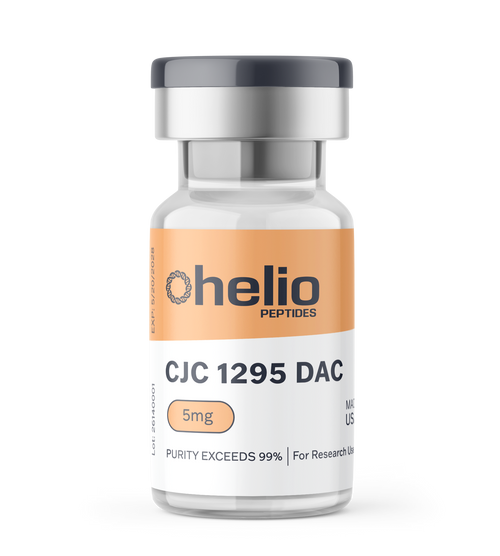
When to also consider CJC-1295: Our CJC-1295 (with DAC) Vial provides extended GHRH receptor stimulation for sustained GH secretion studies - pair with IGF-1 LR3 for studies examining whether continuous versus pulsatile GH axis activation produces different downstream IGF-1R signalling profiles.
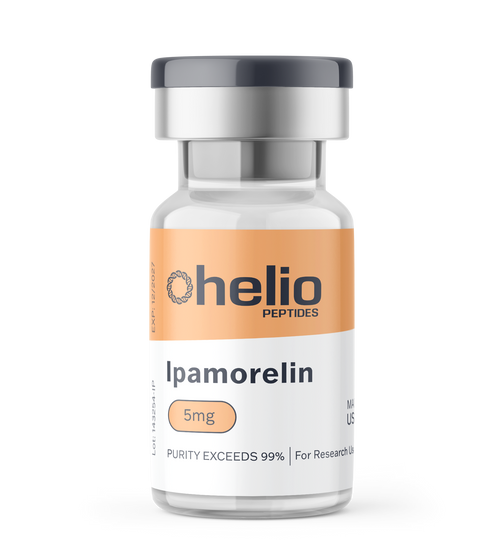
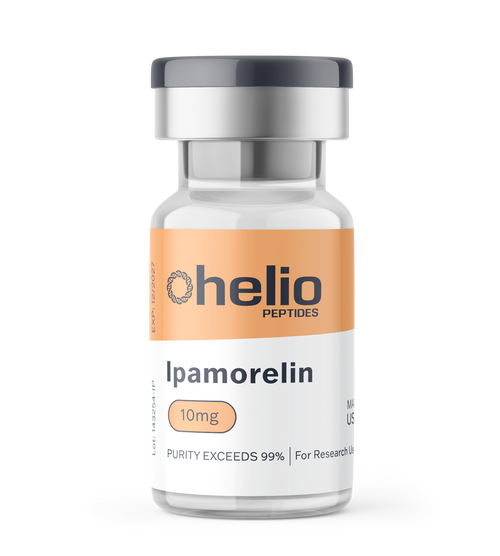
When to also consider Ipamorelin: Our Ipamorelin Vial is the selective GHSR agonist for GH pulse amplification studies - frequently combined with GHRH analogues and paired with downstream IGF-1 LR3 research to characterise the full axis response.
When to also consider AOD-9604: Our AOD-9604 Vial is the GH fragment (176–191) studied specifically for lipolytic effects in adipose tissue - a GH-derived compound that, unlike IGF-1 LR3, does not activate the IGF-1R. Combining AOD-9604 (direct GH receptor lipolytic effects) with IGF-1 LR3 (IGF-1R-mediated anabolic effects) allows dissection of the independent GH and IGF-1 contributions to body composition outcomes.
When to also consider TB-500 or BPC-157: For tissue repair programmes combining IGF-1R anabolic signalling research with regenerative peptide biology, our TB-500 5MG Vial and BPC-157 Vial are the most studied companion peptides in skeletal muscle, tendon, and connective tissue repair model systems.
When to also consider MOTS-c: For metabolic programmes combining IGF-1R anabolic research with AMPK-mediated metabolic signalling, our MOTS-c 10MG Vial provides the mitochondria-to-nucleus AMPK activation axis - a complementary metabolic signalling pathway to IGF-1R/PI3K/Akt/mTOR biology.
Shipping & Fulfilment
|
Detail |
Policy |
|
Same-Day Dispatch |
Orders placed before the daily cut-off ship same day from our US facility |
|
Free Shipping |
On all orders over $100 |
|
Domestic Delivery |
1–3 business days within the USA |
|
Cold-Chain Packaging |
All vials ship with cold-chain protection to maintain peptide integrity in transit |
|
Payment Methods |
Credit/debit card (3D Secure), bank transfer, ETH, BTC, USDC |
|
Customer Service |
1-855-435-4633 · info@heliopeptides.com · Live Chat on site |
Frequently Asked Questions
What is IGF-1 LR3 used for in research?
IGF-1 LR3 is studied in controlled laboratory settings for IGF-1 receptor signalling and PI3K/Akt/mTOR pathway research, skeletal muscle cell biology, cell proliferation and survival signalling, cancer biology IGF axis studies, tissue repair and regeneration models, GH/IGF axis downstream characterisation, and ageing/somatopause research. Research use only - not for human or animal consumption.
What is the difference between IGF-1 LR3 and native IGF-1?
IGF-1 LR3 has two modifications versus native IGF-1: a 13-amino acid N-terminal extension and a Glu→Arg substitution at position 3. Together these reduce IGFBP (IGF binding protein) affinity approximately 1,000-fold, while maintaining full IGF-1R binding affinity. The result is approximately 2–3x greater potency in standard cell culture conditions (where native IGF-1 activity is attenuated by serum-borne IGFBPs) and an extended half-life of approximately 20–30 hours versus 12–15 hours for native IGF-1.
What is the difference between IGF-1 LR3 and IGF-1 DES?
IGF-1 LR3 is an 83-amino acid analogue engineered for systemic, extended-duration IGF-1R signalling with reduced IGFBP affinity. Our IGF-1 DES Vial is a truncated 67-amino acid form lacking the first 3 N-terminal amino acids of native IGF-1, with very low IGFBP affinity and very short half-life - producing intense, localised IGF-1R activation. LR3 is preferred for systemic and sustained signalling studies; DES is preferred for studies requiring intense local receptor activation with rapid clearance.
What is the molecular weight of IGF-1 LR3?
9,111.46 g/mol. Molecular formula C₄₀₀H₆₂₅N₁₁₁O₁₁₅S₉. CAS number 206730-73-6. 83-amino acid synthetic analogue of human IGF-1 with N-terminal extension and R3 substitution.
How should I store IGF-1 LR3?
Is every batch of IGF-1 LR3 third-party tested?
Yes - every batch. ISO 17025-accredited laboratory testing confirms identity by HPLC, molecular weight at 9,111.46 g/mol by MS, and assay content at 1MG. Visit our Certificate of Analysis page or email info@heliopeptides.com to request your batch COA.
Why does IGF-1 LR3 perform better than native IGF-1 in cell culture?
What signalling pathway does IGF-1 LR3 activate?
IGF-1 LR3 binds IGF-1R (receptor tyrosine kinase), triggering receptor autophosphorylation, IRS-1 recruitment, PI3K activation, Akt phosphorylation (Thr308 and Ser473), mTORC1 activation (p70S6K phosphorylation, 4E-BP1 phosphorylation), and downstream protein synthesis, cell proliferation, and anti-apoptotic signalling. It also activates the MAPK/ERK pathway through SHC/Grb2/SOS/Ras signalling. These are the standard readouts for IGF-1R activation studies.
Where is Helio Peptides IGF-1 LR3 manufactured?
Synthesised in the United States by solid-phase peptide synthesis (SPPS) in a controlled US-based facility. USA made, USA tested, shipped same day with cold-chain packaging.
How does IGF-1 LR3 relate to GH secretagogue research?
IGF-1 LR3 is the downstream effector of the GH/IGF axis - GH stimulates IGF-1 production in the liver and other tissues, which then acts on IGF-1R. Studies using our Sermorelin 5MG Vial or Ipamorelin Vial to stimulate upstream GH secretion can be paired with IGF-1 LR3 studies to characterise whether observed downstream effects are mediated through IGF-1R signalling or through direct GH receptor activation.
Does Helio Peptides ship internationally?
Contact info@heliopeptides.com or call 1-855-435-4633 for current international shipping availability. Domestic US orders: same-day dispatch, 1–3 business day delivery.
What payment methods are accepted?
Credit/debit card (3D Secure), bank transfer, Ethereum (ETH), Bitcoin (BTC), and USDC at locked exchange rates.
Is IGF-1 LR3 legal to buy in the USA?
IGF-1 LR3 is sold as a research chemical for laboratory use only. It is not a scheduled controlled substance in the United States and is not FDA-approved for human use. All purchases must comply with applicable federal and state laws. Buyers confirm research intent at checkout.
What does the Certificate of Analysis include?
Batch number, testing date, ISO 17025 facility credentials, HPLC chromatogram confirming identity and purity at ≥99%, mass spectrometry data confirming molecular weight at 9,111.46 g/mol, and assay result confirming 1MG content. Request via our Certificate of Analysis page or email info@heliopeptides.com with your order number.
Is there a bulk discount on IGF-1 LR3?
Yes. Pack of 10 at $53.96 per vial - 10% saving over $59.95 single price, $539.60 total for 10MG. For institutional or wholesale quantities, contact our wholesale team.
Explore More From Helio Peptides
-
Sermorelin 5MG Vial - GHRH receptor agonist, upstream GH axis research
-
CJC-1295 (with DAC) Vial - extended half-life GHRH analogue, sustained GH stimulation research
-
Ipamorelin Vial - selective GHSR agonist, GH pulse amplification research
-
AOD-9604 Vial - GH fragment 176–191, lipolysis and adipose tissue research
-
IGF-1 DES Vial - truncated IGF-1, intense local IGF-1R activation research
-
TB-500 5MG Vial - thymosin beta-4 fragment, tissue repair and regeneration research
-
BPC-157 Vial - GI tract, tendon, and systemic repair research
-
MOTS-c 10MG Vial - mitochondrial-derived peptide, AMPK pathway, metabolic research
-
SLU-PP-332 5MG Vial - pan-ERR agonist, mitochondrial biogenesis and exercise biology research
-
Epithalon 10MG Vial - longevity, telomere, and ageing biology research
-
Thymosin Alpha 1 5MG Vial - immune modulation and antiviral research
-
Wholesale & Bulk Orders - institutional pricing for research programmes requiring consistent supply
All products sold on heliopeptides.com are intended solely for laboratory research and are not for human or animal consumption. These statements have not been evaluated by the Food and Drug Administration. These products are not intended to diagnose, treat, cure, or prevent any disease. By purchasing, the buyer confirms they are a qualified researcher and agrees to comply with all applicable federal and state laws. Not for sale to persons under the age of 21.
Specifications
- MaterialIGF-1 LR3 1MG Research Vial - Long-Acting IGF-1 Analogue | Third-Party Tested
- Also searched asIGF1 LR3, IGF-1 Long R3, Long R3 IGF-1
- Research AreaGrowth Hormone Research
- Presentation—
- CAS Number946870-92-4
- Molecular FormulaC400H625N111O115S9
- Molecular Weight9111.46 g/mol
- TypeRecombinant/synthetic protein (Long R3 IGF-1 analog)
- Receptor / TargetIGF-1 receptor
MFPAMPLSSLFVNGPRTLCGAELVDALQFVCGDRGFYFNKPTGYGSSSRRAPQTGIVDECCFRSCDLRRLEMYCAPLKPAKSA
- Purity (HPLC)≥99%
- Identity (MS)Confirmed to specification
- TestingAccredited (ISO 17025) third-party laboratory
- DocumentationPer-batch COA →
Research on IGF-1 LR3 has established that its N-terminal extension and Arg3 substitution markedly lower affinity for IGF-binding proteins, increasing the fraction of free analog available to activate the IGF-1 receptor. In cell-culture systems this translates to substantially greater proliferative and biosynthetic potency than native IGF-1, together with a longer functional half-life.
Because of these properties, Long R3 IGF-1 is widely used as a research-grade growth supplement and IGF-1R agonist in cell biology, particularly where robust and sustained receptor activation is desired with minimal interference from binding proteins.
IGF-1 LR3 was developed to overcome the IGFBP-mediated limitations of native IGF-1, combining the previously described Arg3 ("R3") substitution with an N-terminal peptide extension to further reduce binding-protein affinity. It has since become a standard high-potency IGF-1R agonist in research and biomanufacturing cell-culture applications.
- Francis GL, et al. J Mol Endocrinol. 1992;8(3):213-223.
- Tomas FM, et al. Biochem J. 1992;282(Pt 1):91-97.
- Sepp-Lorenzino L. Breast Cancer Res Treat. 1998;47(3):235-253.
Cited literature refers to laboratory and preclinical research. This material is supplied strictly for research use only and is not intended to diagnose, treat, cure, or prevent any disease.
Are these research materials third-party tested?
Yes — every batch is analysed by an accredited (ISO 17025) independent laboratory using HPLC and mass spectrometry, with a per-batch Certificate of Analysis.
What purity are the materials?
Materials are verified to 99%+ HPLC purity. Any batch that does not meet the threshold is not released.
Do you provide a Certificate of Analysis (COA)?
Yes. Per-batch COA documentation is provided and is traceable by lot number.
Where do you ship from?
Materials are shipped from the USA in discreet, protective packaging.
Are these products for human use?
No. All materials are sold strictly for laboratory research use only — not for human or animal consumption, diagnosis, treatment, or prevention of any disease.
More Growth Hormone Research materials
RESEARCH USE ONLY · NOT FOR HUMAN OR VETERINARY USE · 21+

